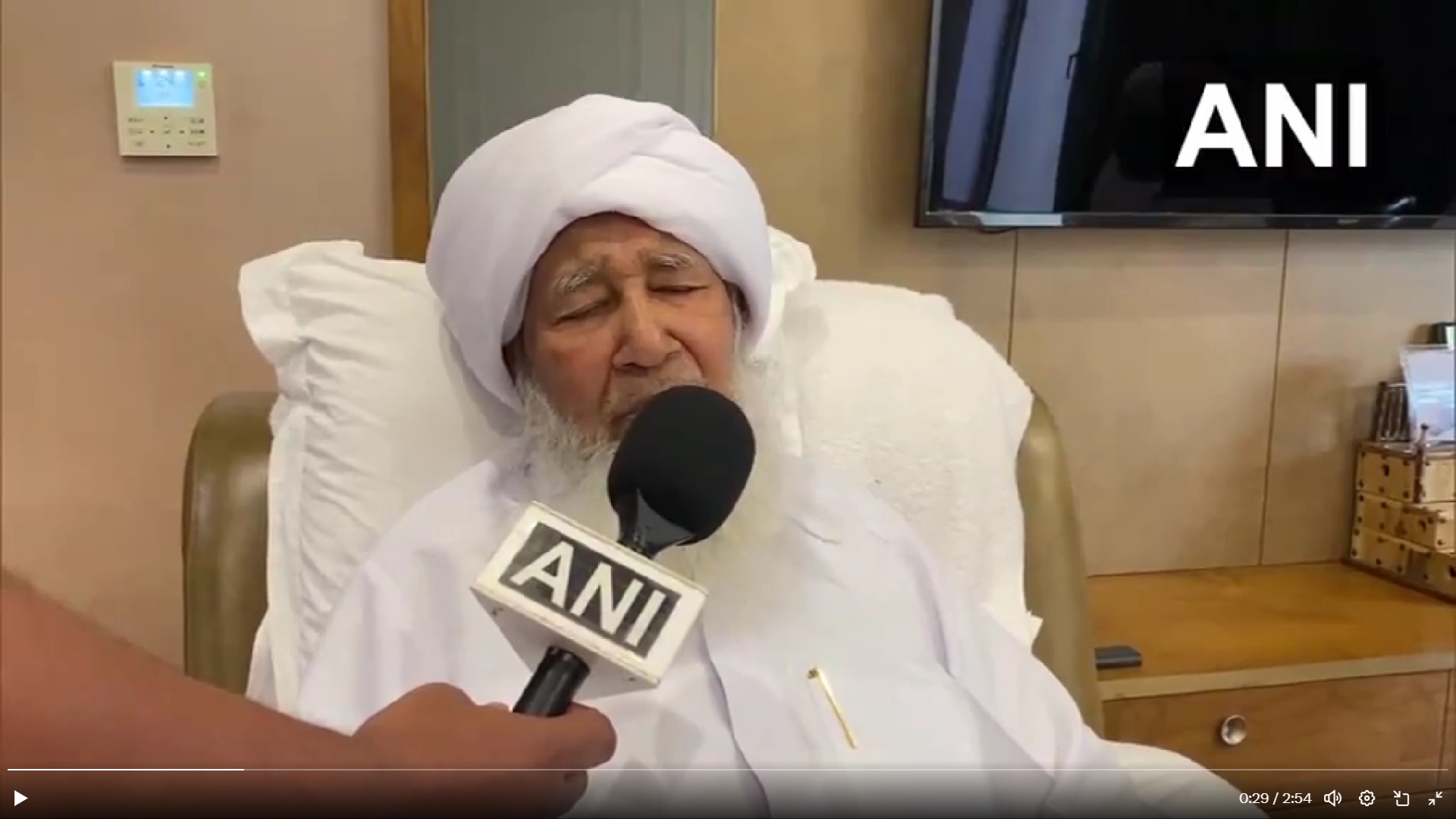
New Delhi: In a dramatic 11th-hour development, the Grand Mufti of India, Sheikh A.P. Aboobacker Musliyar, intervened to halt the execution of Kerala nurse Nimisha Priya in Yemen, where she was on death row for the murder of a Yemeni national. The move came after diplomatic channels proved ineffective due to the absence of formal Indian representation in Houthi-controlled Yemen. But why did he step in to halt the execution and who is he?
Nimisha Priya, a nurse from Palakkad, was sentenced to death in 2020 after being convicted of murdering her former employer, Talal Abdo Mahdi. As the July 16 execution date approached, hopes for a reprieve dwindled — until Musliyar stepped in, invoking both humanitarian concern and spiritual diplomacy.
“I decided to intervene after learning of the helplessness of Nimisha’s mother and family. It is our national and moral responsibility to pursue a humane resolution,” said the Grand Mufti, speaking to reporters after the temporary stay order was issued.
Musliyar, who heads the All India Sunni Jamiyyathul Ulama, leveraged his religious networks in the Middle East, reaching out to influential Yemeni Sufi cleric Sheikh Habib Umar bin Hafiz. The latter dispatched two emissaries to Dhamar, Yemen, where they opened dialogue with tribal leaders, a Supreme Court judge, and members of Mahdi’s family.
The negotiation centered around Yemen’s Islamic legal provision of diyya, or blood money, which allows for clemency in capital cases if the victim’s family agrees to financial compensation. According to sources familiar with the talks, the Yemeni family had previously resisted outreach, but the clerical delegation succeeded in securing a postponement of the execution — buying crucial time.
A letter issued by the court in Dhamar on July 14 ordered the deferral of Nimisha Priya’s execution, just two days ahead of the scheduled hanging. While the duration of the stay is brief — reportedly just a few hours — it is seen as a significant breakthrough in a case that had otherwise reached a dead end.
Musliyar’s initiative received rare bipartisan praise in Kerala, with Chief Minister Pinarayi Vijayan and opposition leaders acknowledging his timely effort. “This intervention has brought a ray of hope to an extremely desperate situation,” said a statement from the Chief Minister’s Office.
The Ministry of External Affairs has so far maintained a low profile, given India’s lack of diplomatic access to the Houthi regime in Sana’a. On July 15, the Supreme Court was informed that the only remaining option was to negotiate blood money with the victim’s kin.
Meanwhile, discussions are underway in Yemen to determine.