Tehran: Iran’s Foreign Minister Abbas Araghchi urged Saudi Arabia on Monday to evict US forces from its territory, declaring it “high time” in light of recent regional strikes aimed solely at adversaries.
“Iran respects the Kingdom of Saudi Arabia and considers it a brotherly nation,” Araghchi wrote on X. “Our operations are aimed at enemy aggressors who have no respect for Arabs or Iranians, nor can provide any security. Just look at what we did to their aerial command. High time to eject U.S. forces.”
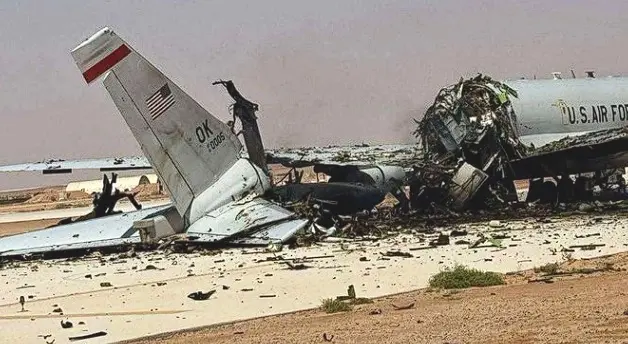
An Iranian missile strike hit Saudi Arabia’s Prince Sultan Air Base, wiping out a vital E-3 Sentry AWACS aircraft—the first confirmed battlefield loss for this system—and causing damage to several additional warplanes, according to a Bloomberg report.
The report noted the plane, valued at around $300 million and essential for tracking remote thre
ats while directing fighter jets, was made inoperable, with unverified images depicting its tail fully detached. The US holds a stockpile exceeding 30 of these aircraft for replacements, yet the strike inflicts a notable tactical disruption.
In a related development, Dubai authorities announced that maritime firefighting teams had successfully doused a fire on a tanker struck by a drone attack. All 24 crew members remained safe with no injuries reported, and officials are ongoing assessments, Reuters reported.
Markets felt the ripple effects immediately. Brent crude futures climbed over 2% to $115.17 per barrel in early Asian trading, only to moderate after The Wall Street Journal reported US President Donald Trump’s willingness to pursue conflict resolution even if the Strait of Hormuz stays closed. The benchmark is set for a historic monthly surge of about 59% in March—its largest ever—propelled by intensifying Middle East hostilities.
Meanwhile, Gulf states differ sharply on how to respond to Iran with the conflict showing no sign of coming to an end any time soon. Saudi Arabia and the UAE want stronger military action, including a possible ground invasion by the UAE. Kuwait and Bahrain support this hardline view. Oman and Qatar prefer diplomacy.