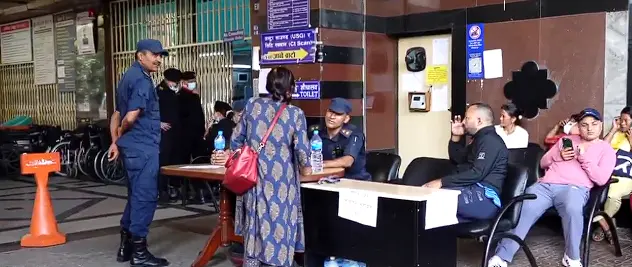
Nuwakot: A week after deadly flash floods tore through northern Nepal, the Nuwakot Army camp has become a grim collection point for decomposed and dismembered bodies. Around 3,000 Nepal Army personnel are leading search, rescue and relief efforts across some of the region’s toughest terrain.
The stench of decay arrives before the bodies. Rescuers have grown accustomed to this horror; families waiting for news have not.
On a recent morning, an Army helicopter brought in an elderly couple pulled from the flood zone. They were alive but clearly traumatised; their names were not immediately released. For those at the camp, each such landing offers a sliver of hope. For many, that hope is fading.
“Hope of finding survivors is fading, but the Army will continue the search and rescue operations,” an Army spokesperson told The New Indian Express, pointing to the treacherous landscape and logistical challenges.
‘Devighat Is Completely Destroyed’
On the ground, the destruction is overwhelming. In Devighat and Trishuli bazaars, entire neighbourhoods lie flattened or buried under mud and debris. Homes, roads and riverside farmland have been washed away, leaving scars where settlements once stood.
The damage is worst at Devighat. Visiting a relief centre at Chandrajyoti Secondary School in Bidur Municipality, former Nepal Home Minister Janardan Sharma said, “Devighat is completely destroyed,” gesturing at vast stretches of farmland stripped bare by the floods. He added that seven to eight villages and small towns along the corridor had also been badly hit.
The school now serves as a lifeline. Relief material is collected here and handed out to families who have lost homes and livelihoods. Affected households receive identity cards before collecting rations — rice, beaten rice, cooking oil, salt and lentils—to ensure aid reaches the right people.
At the Army camp, focus has shifted to a desperate search for 10 people who disappeared near Syabrubesi, including Indian-origin Australian citizens travelling with a larger Kailash Mansarovar pilgrimage group.
Australian From Chennai Waits For Missing Wife
Among those waiting is Sriram, an Australian citizen from Chennai, whose wife, Shruti Chandrasekhar, remains missing. The group reached Kathmandu on the night of August 23, spent a day there and left on August 25. Delays kept them in Syabrubesi instead of moving to the immigration point as planned.
There were 10 in the party. Their last confirmed contact was at about 8 am on August 26, just before the flood struck. Mobile signals remained active until around 2.35 pm, but could only narrow their location to a broad area near Goljung, above Syabrubesi. The terrain is so rugged that rescuers cannot reach every part of the zone.
“If they have not gone further up, they could still be safe,” one relative said, holding out hope that the missing travellers may have found shelter, reached a rescue camp or are stranded beyond the current search area. After seven days without contact, hope has turned into a test of endurance.
The missing group includes a family of four — mother, father and two sons — among several Indian-origin Australians caught in the disaster while travelling the Himalayan route. Relatives from thousands of kilometres away remain in Nepal, tracking every helicopter movement and every new update from the rescue operation.