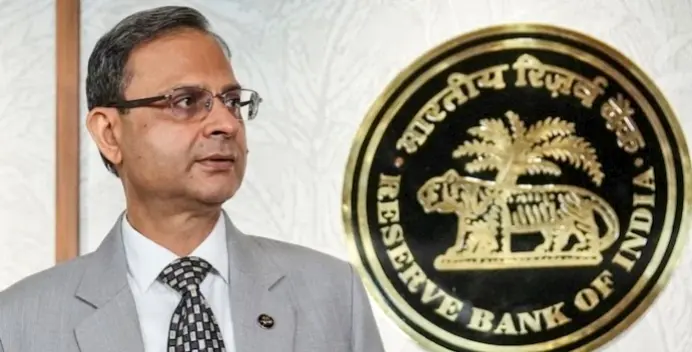
New Delhi: Housing and vehicle loans are likely to get cheaper with the Reserve Bank of India (RBI) slashing its repo rate by 25 basis points from 5.5% to 5.25% on Friday. The cut was announced by the central bank’s governor Sanjay Malhotra. This was done to bolster growth amid concerns regarding the rupee’s slump.
The decision was taken unanimously after a three-day meeting of the RBI’s Monetary Policy Committee (MPC). This meeting is held every two months to decide the central bank’s strategy. The MPC weighed record low inflation against a falling rupee that hit its lowest yesterday.
In June this year, the MPC had reduced the key lending rate from 6% to 5.5% in view of a softening inflation. A cut in the repo rate is expected to translate into cheaper housing and vehicle loans for retail borrowers.
The RBI expects retail inflation to be softer than its earlier projection, with underlying inflation pressures being lower than the headline estimates. Consumer Price Index
(CPI) inflation, or retail inflation, has been projected downwards at 2% for FY2025-26.
For the first quarter of FY2026-27, the inflation is projected at 3.9%, lower than its previous estimate of 4.5%, with a rise in precious metal prices expected to add to the headline CPI. The risks to inflation forecasts are evenly balanced, Malhotra said.
The RBI has also sharply raised the Gross Domestic Product (GDP) forecast for the current financial year to 7.3% from its earlier estimate of 6.8%. The GDP forecast for the current quarter (Q3, October-December) is also higher at 6.7% than the earlier 6.4%.
The last quarter recorded a six-quarter high GDP growth at 8.2%.
The growth-inflation balance continues to provide policy space, said Malhotra
The MPC, in its meeting, also adjusted the Standing Deposit Facility (SDF) to 5% and Marginal Standing Facility (MSF) to 5.5%. A decision has also been taken to conduct forex swaps and buy bonds worth Rs 1 lakh crore via Open Market Operations (OMO) auctions, hoping that these would facilitate monetary transmission and provide sufficient liquidity.
Malhotra said that the year saw robust growth and benign inflation despite continuing challenges arising from geopolitical and trade uncertainties. The financial parameters of the bank remain robust, with the bank credit seeing an uptick and retail lending supporting growth, he said.