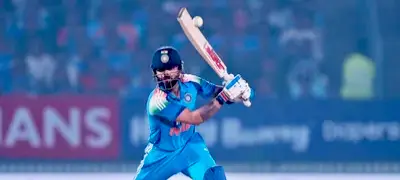
New Delhi: Virat Kohli Is now third after Viv Richards and Brian Lara in the list of players who have spent most days at No 1 position as an ODI batter in the International Cricket Council (ICC) rankings.
This happened after the ICC corrected Kohli’s tally, after an earlier official figure created confusion over his place in the all-time list.
Kohli returned to the top spot in the latest ODI rankings update following his match-winning 93 off 91 balls against New Zealand in Vadodara, ending a spell away from the summit that had lasted since July 2021. In the initial ICC communication around that update, Kohli was credited with 825 days at No 1 – a number that was also reflected in the accompanying “most days at the top” chart shared alongside the rankings story, as reported by Hindustan Times.
The statistic has since been amended by ICC, which now states Kohli has spent 1,547 days as the No1 ODI batter in total. The updated count makes Kohli the India batter with the most days at the top of the ODI rankings and places him third on the all-time list. Only Richards (2,306 days) and Lara (2,079 days) have spent more time as the No 1 ODI
batter.
This correction significantly reshapes Virat Kohli’s historical standing. With the 825-day figure, he was shown outside the top tier despite his repeated returns to No 1 across different eras of ODI cricket. With the revised tally of 1,547, Kohli moves ahead of several modern greats and sits behind only Richards and Lara on the longevity chart – a more accurate reflection of multiple spells at the top rather than one isolated stint.
The update also highlights how a small numerical error can quickly alter the narrative in the “rankings” era, where “days at No 1” has become a shorthand measure for sustained dominance. For Kohli, that number now underlines not just peak brilliance but the rare durability required to return to the summit again and again, across changing conditions, formats and opposition cycles, it has been reported.
The ICC has not publicly explained why the earlier figure was published, but such discrepancies typically arise when different counting methods are used across graphics and editorial copy, or when an older data pull is carried into a new visual package. The corrected figure indicates the ICC is now applying a cumulative total across Kohli’s various stints at No 1.
According to the report, Kohli first reached No 1 in October 2013 and has reclaimed the spot 10 times since, reinforcing his long-term status as one of ODI cricket’s defining batters. With the correction now issued, the focus will be on ensuring all ICC-facing tables and graphics reflect the same updated total going forward.