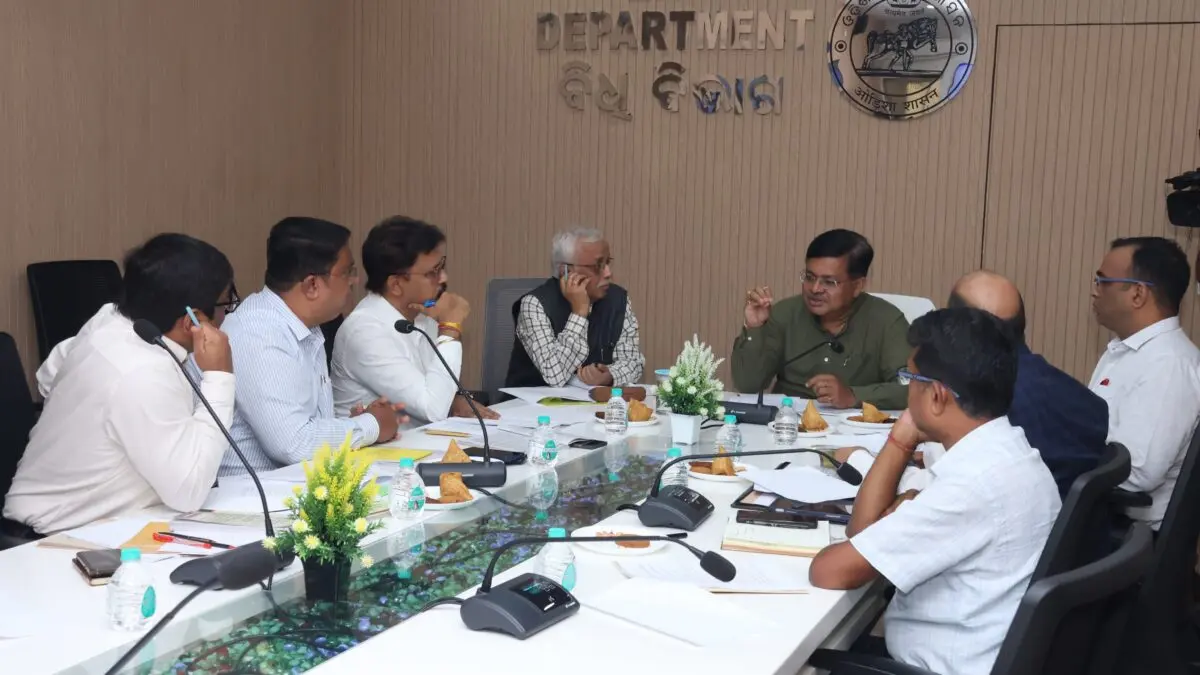
Bhubaneswar: The Odisha government has enlisted the technical expertise of IIT Bhubaneswar to develop a refined queue-based darshan system at the 12th-century Shree Jagannath Temple in Puri, aimed at managing the steadily rising number of devotees and ensuring a more organised, fulfilling spiritual experience.
Addressing reporters after a high-level review meeting, Minister Harichandan explained that the state’s original proposal to install elevated wooden ramps inside the Nata Mandap and Jagamohan areas will undergo significant modifications. “We had initially planned wooden ramps to improve devotees’ view of the deities. However, IIT Bhubaneswar is now preparing a pilot model to further refine the design,” he stated.
The prototype being developed by IIT Bhubaneswar will first undergo a trial run before the queue system is fully implemented within the next three to four months, he added.
Under the revised plan, five to six lanes of elevated ramps will be constructed in the Nata Mandap and Jagamohan, raising devotees’ eye level for clearer glimpses of Lord Jagannath, Lord Balabhadra and Devi Subhadra from a distance. An expert team has also proposed ramps through the Sata Pahacha (seven steps) area, with five ramps running from the Garuda Stambha to the Bahaar Katha (outer wooden barricade). Around 50 devotees will be able to have darshan simultaneously across the five ramps, allowing between 8,000 and 10,000 people to move through the sanctum per hour.
Taking to X (formerly Twitter), Minister Harichandan also shared his thoughts on the initiative: “People across the world have immense devotion and interest towards Lord Jagannath. Consequently, the number of devotees increases unceasingly every year, multiplying manifolds particularly on holidays. Keeping this in view, to ensure disciplined darshan for all devotees, I chaired a high-level meeting and discussed various aspects. In the meeting, IIT Bhubaneswar presented various models for disciplined queue management. A pilot project for the best model will be prepared soon for review by the Chhatisa Nijoga and the Shree Jagannath Temple Administration (SJTA). Additionally, devotees will be able to have disciplined darshan through 5 separate ramps. As a result, approximately 8,000 to 10,000 devotees can have smooth darshan per hour, making the experience significantly better organised and hassle-free.”
Highlighting the urgency of the project, Shree Jagannath Temple Administration (SJTA) officials pointed out that the current unorganised setup frequently causes heavy congestion in the Nata Mandap. “The present arrangement leaves many disappointed, as they cannot properly view the deities. The new system will not only ease congestion but also enrich the spiritual experience,” a senior temple official noted.
In addition to the ramp redesign, temple officials confirmed plans to install air conditioning inside the temple complex and Nata Mandap to increase physical comfort during long waiting times. These enhancements will strictly adhere to traditional temple customs and will be executed without disrupting any daily rituals, following comprehensive consultations with the Chhatisa Nijog and senior servitors.