Review By Dr Upama Behera
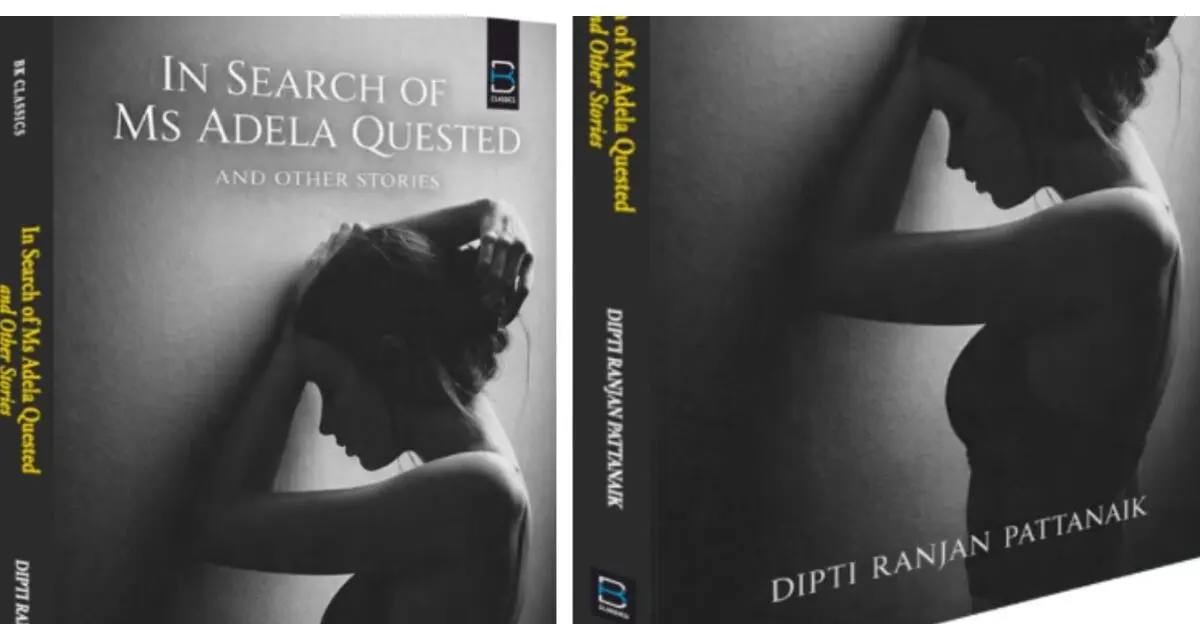
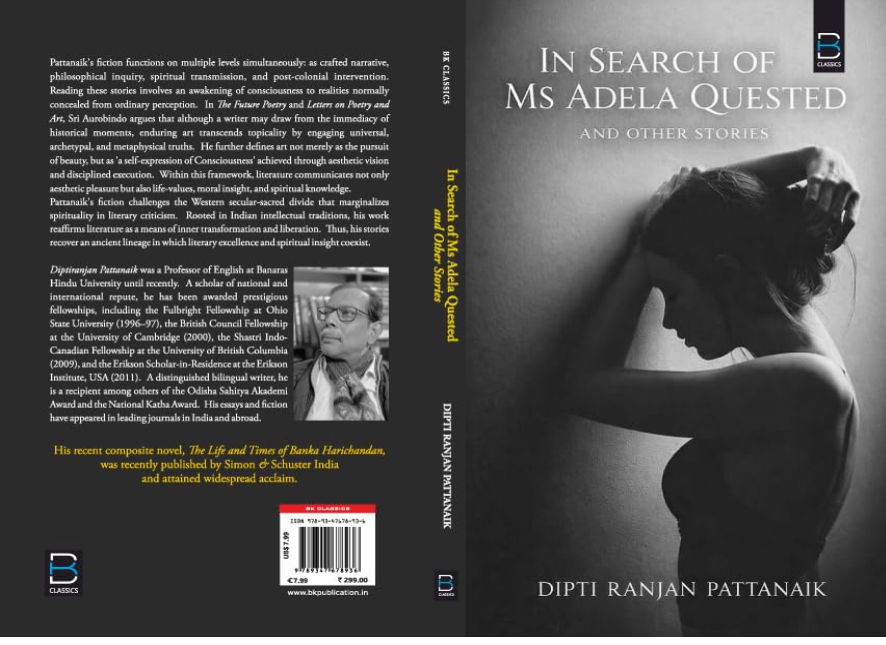
Dipti Ranjan Pattanaik’s In Search of Ms Adela Quested and Other Stories, is a translation of nineteen short stories originally composed in Odia. The book presents the hidden reality of human existence through a consciousness of spiritual knowledge. The title is evocative of E.M. Forster’s A Passage to India where the character Adela Quested symbolises the failure of the Western intellectual to grasp the “real India.” The story serves as a literary bridge between the socio-cultural specificities of Odisha and universal spiritual ontologies.
The collection’s theoretical underpinning is established in the preface by Manish Gupta and Akshya Aditya. By synthesizing Sri Aurobindon’s philosophy with modern narrative techniques, Pattanaik explores the limitations of intellectualism and the transformative potential of spiritual consciousness.
Pattanaik employs diverse narrative strategies to explore the tension between tradition and modernity. In America: A Love Story, through the character of Vivek, the author explores the immigrant experience and the fragmentation of familial obligations. The “pretext” of sending his mother back to her village, framed by traditional funeral rites, serves as a critique of the ethical compromises necessitated by the American social landscape. Cephania Kisku’s Colourless Makara provides a psychological examination of race and resilience. By situating the protagonist in a complex intersection of tribal identity and Christian conversion, Pattanaik explores the bleached nature of identity in a post-colonial setting. The psychological and spiritual approaches of the narrator enable the readers to know the odyssey of Dilip Bhai becoming Siddhananda in the story, The Last Leap. Similarly in the Magic Slippers the readers are aware of how the subconscious desires are basic to all human beings. Romance of a Stone sheds light on how the divine power of love can impart a human shape to a stone and produce many marvels. The Four Dreams of my Mother reflects the narrator’s profound belief in Indian philosophy and indigenous knowledge system. The well crafted narrative reveals the unflinching faith of his mother in God.

The first person perspective of storytelling leads the reader to unravel the mystery of the Marabar caves that Foster describes in A Passage to India. The Horizon of Silence focuses on the circumstance that led Sadhana Aunty to read books of B.F. Skinner and Sukhodolsky on autism.
The Host reflects the mystery of dearth and reality that an ordinary person is unable to understand. The Man Who Ran: A Modern Parable reflects the fear associated with running. Here, the narrator sarcastically presents how people forget the reality of death and madly run after material success in life. The story ‘The Mirror’ depicts the love and hate relationships of the narrator with America. Pattanaik, through the story The Prodigy highlights that there is no hierarchy in Karma and true Karma is a thing that is done well and fruitfully. The Shade of the Babul reflects the virtuous qualities of Sanjukta as an ideal Indian woman. The Wait depicts the post partition trauma of Fatima Bibi, a Muslim woman. The World –mother tries to establish the moral standards of modern women. Rohit Das Soren’s Last Laugh tries to unearth the tragedy of modern man’s loss of manhood under the influence of American culture and modern medicine.
The collection ultimately culminates in a profound philosophical realization: that human beings are subject to forces beyond their comprehension, and, that the search for meaning requires a transcendence of ego and material attachment. Pattanaik suggests that in a world marked by moral decline and existential uncertainty, spiritual awakening offers the only viable path to wholeness. His narratives advocate a synthesis of material and spiritual realities, proposing that literature itself can serve as a means of achieving this integration.
In conclusion, In Search of Ms Adela Quested and Other Stories stands as a significant contribution to contemporary Indian literature. Pattanaik’s ability to weave together philosophical inquiry, social critique, and narrative artistry results in a collection that is both intellectually stimulating and emotionally resonant. While the stories occasionally privilege philosophical discourse over narrative simplicity, their thematic richness and symbolic depth ensure a lasting impact. The work is particularly valuable for readers interested in the intersection of spirituality, postcolonial identity, and existential thought. Ultimately, Pattanaik’s fiction invites readers to look beyond the surface of reality and engage with the deeper truths of human existence.
(Dr Upama Behera is Asst. Professor of English
S.C.S (A) College, Puri
beheraupama.5@gmail.com)