Kolkata: The entire state of West Bengal has gone “dry”, at least officially – 96 hours before the first phase of polling – thanks to the imposition of a 117-year-old Raj-era law by the Election Commission.
West Bengal goes to the polls in two phases. The first phase will be held on April 23 and the second one April 29.
As a rule the sale of liquor from retail outlets or its serving at restaurants, bars and clubs is banned 48 hours before polling starts. However, this happens only in the districts where the elections are being held.
Things turned out to be different this time. The EC imposed a blanket ban on liquor across the state, 96 hours before the first phase of polling, much to the chagrin of tipplers and those associated with the trade.
This has now turned into an unprecedented 198-hour ban that started on Monday and will end after voting is completed on April 29, with a brief break in between.
Liquor will also be out of bounds on May 4, the day of counting.
The state excise commissioner’s order reached outlets on Sunday evening, imposing the 96-hour ban. On Monday, all the district authorities issued separate orders, with those for the second-phase districts clamping the 198-hour ban. By then, authorities had called up bar, restaurant, pub and alcohol shop owners and told them to down shutters, as reported by The Telegraph online.
The order attributed the decision to an “unusual spurt” in liquor sales since the model code of conduct kicked in, and cited a “sudden growth” in packaged liquor lifted by retailers from WBSBCL depots and an increase in “sensitive shops” identified as hubs for potential voter bribery.
“…Given the gravity of the situation, the period of closure of retail establishments is required to be extended to 96 hours, which is beyond the (usual) period of 48 hours…,” it said.
“Therefore, to ensure that liquor is not used as an inducement… and a free and fair poll takes place, the special provisions of Section 26 of the (Bengal Excise) Act has to be invoked….”
Section 135C of the Representation of the People Act, 1951, restricts the election-time liquor ban to the 48-hour period ending with the hour fixed for the polling to conclude.
“While this 48-hour window had been notified for all the states (and Puducherry) going to the polls this month, the EC tore into the rulebook and bypassed its legislative constraints by invoking Section 26 of the British Raj-era Bengal Excise Act, 1909,” a source has been quoted as saying.
Section 26 empowers district magistrates and police commissioners to issue written orders for the temporary closure of shops selling intoxicants to preserve public peace. It was usually invoked for emergencies like riots or localised unrest.
“The EC is effectively hiding behind this colonial-era legislation. Had this provision not existed, the move would have faced immediate challenges in court, potentially leading to the order being struck down,” a Trinamool source told the newspaper.
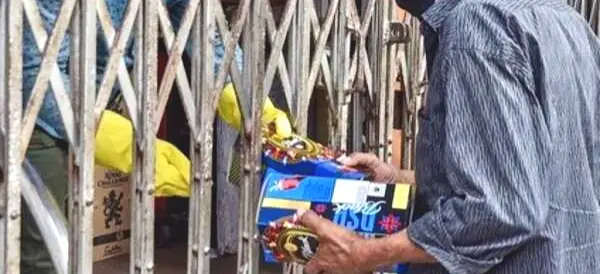
While political parties will not turn this into a poll plank, given the social taboo still associated to liquor consumption, bootlegging has already begun in a massive scale since Monday evening.
While sale of branded liquor at a premium, to those who can afford it, is not anybody’s concern, authorities will have to ensure there is no sale of hooch that can cause health concerns.