New Delhi: The Income Tax Bill, 2025, which was introduced in the Lok Sabha on February 13 to replace the existing Income Tax Act, 1961, has been formally withdrawn.
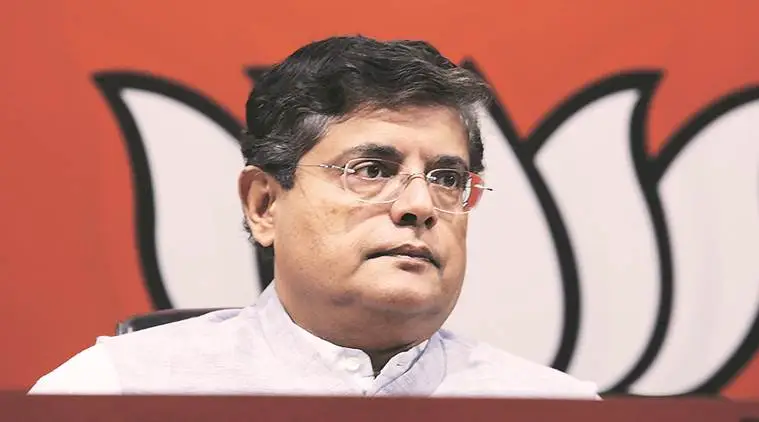
Come Monday, a new version of the Bill, incorporating most of the recommendations made by the Select Committee chaired by BJP’s national vice-president and MP Baijayant Jay Panda, will be introduced in Parliament on August 11.
The Select committee submitted its report to Parliament on July 21. Over 4,500 pages long, the report includes 285 suggestions to improve the draft New Income Tax Bill, 2025, which is meant to replace the old 1961 Act.
The new version of the Bill, redrawn to avoid confusion of multiple versions, and provide a clear and updated version, will be introduced on Monday for the consideration of the House.
The committee headed by Panda, the Lok Sabha MP from Odisha’s Kendrapara, reviewed the legislation. According to Panda, the new law, once passed, will simplify India’s decades-old tax structure, cut down legal confusion and help individual taxpayers and MSMEs avoid unnecessary litigation.
“The current Income Tax Act of 1961 has undergone more than 4,000 amendments and contains over 5 lakh words. It has become too complex. The new bill simplifies that by nearly 50 per cent — making it far easier for ordinary taxpayers to read and understand,” Panda was quoted as saying by news agency IANS.
Panda said that the biggest beneficiaries of this simplification would be small business owners and MSMEs, who often lack the legal and financial expertise to navigate complicated tax structures.
Among the important changes suggested by the Select committee concerns citizens earning income from their house properties.
Firstly, the 30% standard deduction, which is already allowed after municipal tax deductions, should be clearly mentioned in the new law. Also, the benefit of home loan interest deductions, currently only available for self-occupied properties, should also be extended to rented properties.
The Select committee has also recommended that the refund process should be quicker, easier, and more transparent.
The CBDT (Central Board of Direct Taxes) has said that new rules are being drafted under a policy called ‘Enforcement with Empathy,’ aiming to reduce hassles for honest taxpayers.