New Delhi: In a firm diplomatic rebuttal, India’s Ministry of External Affairs (MEA) has dismissed Nepal’s recent objections to the reopening of border trade through the Lipulekh Pass, describing Nepal’s territorial claim as “neither justified nor based on historical facts.”
This response follows the bilateral agreement between India and China on August 20, 2025, to resume border trade via Lipulekh and two other designated trans-Himalayan routes.
Nepal officially objected to the resumption, asserting that Lipulekh is an “inseparable part” of its territory. In response, India reiterated that the trade resumption continues a historical precedent: such trade had been ongoing since 1954 and only disrupted temporarily due to the COVID-19 pandemic and other factors.
Our response to media queries regarding comments made by Nepal on border issue⬇️
🔗 https://t.co/0I3Es5UUfP pic.twitter.com/nxqFJtudGH— Randhir Jaiswal (@MEAIndia) August 20, 2025
India labelled Nepal’s claim “unjustified,” while still emphasizing that it remains open to “constructive interaction” with Kathmandu on resolving border issues through diplomatic dialogue, reported the TOI.
What is the dispute?
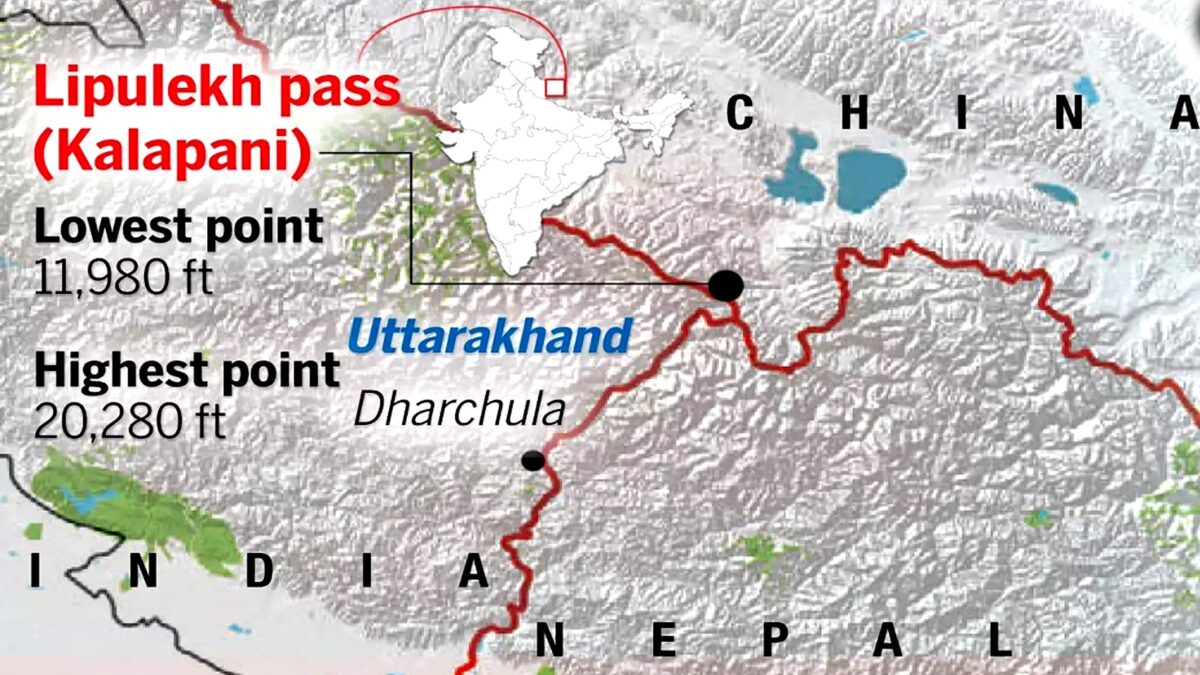
Lipulekh Pass, located in the Himalayas, marks the border between India’s Uttarakhand state and the Tibet Autonomous Region of China, near the Nepal trijunction. Historically, it has been used for trade and pilgrimage routes, including the spiritually significant Kailash-Manasarovar Yatra .
Nepal’s claim centers on interpretations of the Anglo-Nepal Sugauli Treaty of 1816, which demarcates boundaries along the Kali (Mahakali) River. Nepal contends that the true source of the river lies further west—at Limpiyadhura—entitling it to territories including Lipulekh, Kalapani, and Limpiyadhura .
India, countering this, maintains that the practical and administrative boundary follows the watershed ridge and that the Kali River starts downstream of Lipulekh, placing that area firmly within its jurisdiction.
The dispute ramped up in 2020 when Nepal passed a constitutional amendment bill that legally incorporated these territories on its national map. India castigated the move as “artificial” and “unilateral,” deeming it untenable and historically unfounded.
Multiple rounds of bilateral talks have taken place over the years, but the issue remains unresolved .
Diplomatic Engagements: India’s reaffirmed readiness for “constructive interaction” suggests that despite strong rebuttal, avenues for resolution remain open.
Border Trade Dynamics: The Lipulekh route’s reopening is significant for pilgrim and trade mobility between India, Nepal, and China, and could impact regional economic ties.
Mapping and Symbolism: Nepal may continue featuring disputed territories in its official maps, reinforcing its stance domestically and internationally.
Strategic Calculus: This development coincides with India’s strengthening of ties with China. How it balances strategic imperatives will influence Indo-Nepal ties.