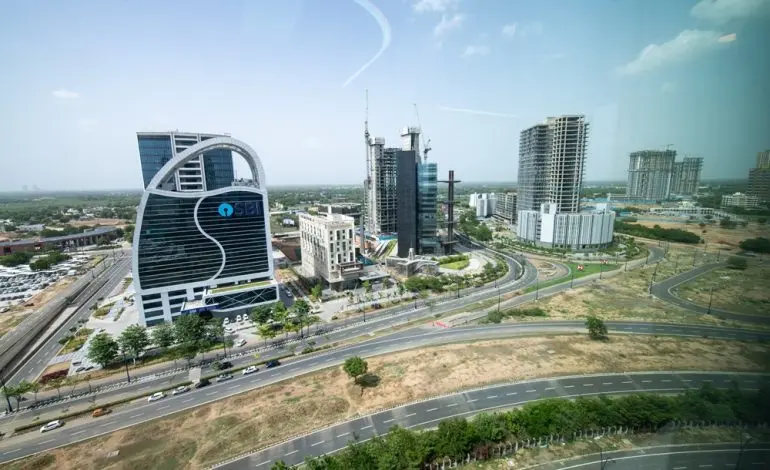
New Delhi: Six years after Making Cities Resilient 2030 (MCR2030) programme was launched under the United Nations Office for Disaster Risk Reduction (UNDRR) campaign, India has got its first Resilience Hub.
Gujarat International Finance Tec-City (GIFT City), located on the banks of Sabarmati river between Ahmedabad and Gandhinagar, has been designated as an MCR2030 Resilience Hub, an initiative aimed at strengthening disaster preparedness and climate resilience in urban centres.
“We are pleased to welcome @GIFTCity_ as the newest #MCR2030 Resilience Hub in Asia & the Pacific – and the first #ResilienceHub in India. Congratulation!” UNDRR Asia-Pacific said in a post on X.
Barcelona, Greater Manchester, Helsingborg (Sweden), Milan and Campinas (Brazil) were among the earliest cities to receive recognition under UN’s MCR2030 programme.
GIFT City, which spans 4.05 sq km, is being expanded to 13 sq km, including its SEZ and Domestic Tariff Area zones. Around 2,500 people currently live in the city and more than 28,000 people work there.
According to Sanjay Kaul, group chief executive officer and managing director of GIFT City, the recognition will strengthen the city’s efforts to make resilience an integral part of its growth and allow it to share its experience with partner cities.
“Resilience is fundamental to the credibility of a global financial centre. Businesses and communities need confidence that the city can anticipate risks, protect people and sustain critical services through disruption,” said Kaul.
GIFT City joined the MCR2030 initiative in July 2022, with support from the Gujarat Institute of Disaster Management and guidance from UNDRR. The first two stages of the initiative’s Resilience Roadmap have been completed, and the third stage, focusing on implementation, is underway
GIFT City’s preparedness framework includes disaster management plans, building and utility levels, an Incident Response System and designated disaster management officers.
Fifteen mock drills have been conducted to test emergency responses, including earthquakes and fires, and maintains a dedicated disaster management store with more than 36 types of emergency equipment.
Its early-warning system integrates India Meteorological Department forecasts, alerts from the National Disaster Management Authority’s SACET platform, earthquake reports and inputs from a local weather station.