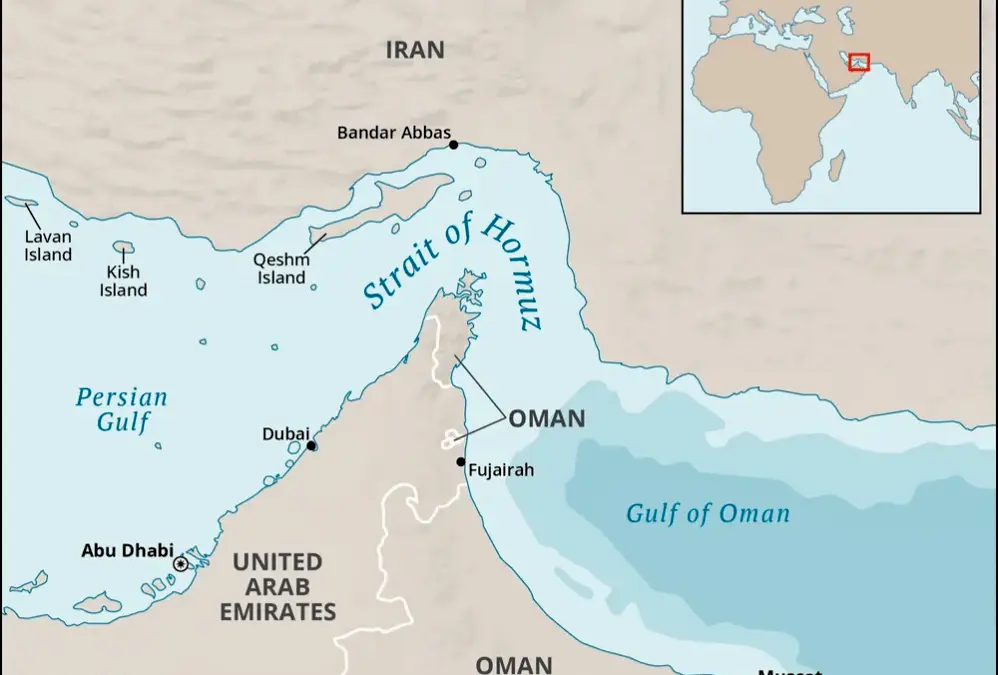
New Delhi: The Indian government managed to keep one of the country’s most critical trade arteries functioning even as tensions threatened shipping through the Strait of Hormuz, it informed the Parliament on Wednesday.
In response to a question, the government said 60 merchant vessels carrying cargo for India safely transited the Strait of Hormuz despite the heightened security situation.
Parliament was also informed that 3,972 Indian seafarers were repatriated from the Gulf region, while a round-the-clock crisis management system handled tens of thousands of distress calls and emails.
The figures offer the first comprehensive official snapshot of India’s response to a crisis that had raised fears of disruptions to global energy supplies and trade, as reported by News18.
With nearly a fifth of global oil trade passing through the narrow waterway linking the Persian Gulf to the Arabian Sea, the Strait of Hormuz is one of the world’s most strategically important maritime chokepoints.
The stakes are particularly high for India as it imports nearly 90% of its crude oil requirements, with a substantial share coming from Gulf producers such as Iraq, Saudi Arabia, the UAE, and Kuwait. Any prolonged disruption in the Strait can quickly translate into higher freight costs, rising insurance premiums, and upward pressure on domestic fuel prices.
The government’s disclosure that 60 India-bound vessels completed their passage safely suggests that the country’s supply chain remained largely intact against that backdrop, despite fears of escalation.
The movement of the 3,972 Indian seafarers also reflects concerns over the safety of thousands of Indians employed on commercial ships operating in one of the world’s busiest maritime corridors.
Close contact was maintained with their families, while dedicated welfare counsellors were made available wherever required, officials have said.
India has now risen to second place in the world as far as the number of seafarers is concerned. Indian mariners serve on ships across international fleets. During periods of conflict, they often find themselves operating in high-risk waters even when they are not directly linked to military operations.
The government also detailed how a 24-hour control room and the Directorate General of Shipping Communication Centre (MMDAC) functioned round the clock throughout the crisis.
Under the emergency protocol, ships were required to establish contact with the nearest Indian Navy or coalition warship over VHF Channel 16 and immediately inform the DG Communication Centre, the Information Fusion Centre-Indian Ocean Region (IFC-IOR), and the United Kingdom Maritime Trade Operations (UKMTO).
Since its activation, the control room has handled 15,771 telephone calls and 36,499 emails from seafarers, their families, and other maritime stakeholders, reflecting the anxiety generated by the regional conflict and the volume of coordination required.