New Delhi: The Permanent Labour Certification (PERM) programme of the US labour department has turned into a major diplomatic row with India officially criticising the decision to suspend eight major technology companies.
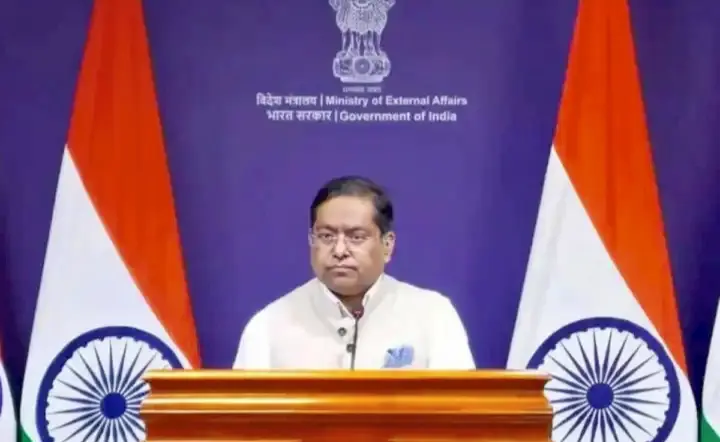
The Ministry of External Affairs (MEA) said on Friday that the move does not advance the shared ambitions of the two countries, while expressing strong reservations against US vice president J D Vance’s remarks about Indian professionals, calling the descriptions “deeply offensive”.
India stressed that the PERM programme is separate from the H-1B visa system, India has said in a statement.
While the suspension does not, by itself, affect the validity of existing H-1B visas or the status of visa holders and their dependents, it could have implications for eligible employees pursuing permanent residency, or Green Cards.
“Talent mobility adds value to both economies,” the MEA statement said, arguing that the movement of skilled professionals creates opportunities for Indians while also benefiting US companies through access to specialised talent, innovation, research, productivity, competitiveness and job creation, as reported by News18.
“The steps announced by the US do not advance the shared ambitions of both countries,” the MEA said while describing professional mobility as an area of substantial mutual benefit.
Taking on comments made by Vance in connection with the US action, India said they disregarded the contributions of highly educated and skilled Indian professionals to the American economy and its innovation ecosystem.
“The history of the United States itself has been shaped by generations of immigrants whose labour, enterprise and innovation have contributed to its growth and prosperity,” the MEA statement said.
The use of terminology carrying painful historical and colonial legacy connotations was “deeply offensive”, India said, adding that the government is continuing to monitor developments.
On Thursday, the US department of labour announced that it was suspending Cognizant, Infosys, Tata Consultancy Services (TCS), Wipro, HCL Technologies, Capgemini, Microsoft and Adobe from the PERM programme.
The department would neither accept new permanent labour certification applications involving the companies nor process pending ones, labour secretary Keith Sonderling announced alongside Vance, who heads the US anti-fraud task force.
“Since 2009, just these companies alone have requested almost three million foreign workers. They’ve received over 230,000 H-1B visa approvals and over 100,000 permanent labour certifications,” Sonderling said.
The companies’ use of foreign-worker programmes had come at the expense of American employees, he said adding: “That’s hundreds of thousands of jobs that were taken from American workers.”
Vance also accused Microsoft of abusing the system. “There has been no company in the United States, unfortunately, that has abused the system more than Microsoft,” he said.
Microsoft had laid off 6,000 American workers in the previous year while benefiting from 6,300 H-1B temporary worker visas and nearly 3,000 Green Cards, the US vice president claimed.
The company, however, maintained that around 80% of its H-1B applications filed in the previous fiscal year were intended to extend or change the status of existing employees, rather than recruit new workers. The company also said it paid H-1B employees the same as other workers performing comparable jobs.
The PERM programme is a key stage in the employment-based Green Card process for many foreign workers. Under the system, employers generally have to demonstrate that hiring a foreign national will not adversely affect the wages or job opportunities of similarly employed American workers.
The suspension could therefore disrupt the permanent-residency process for eligible employees of the affected companies. However, it does not automatically cancel existing H-1B visas or change the immigration status of those who hold them.