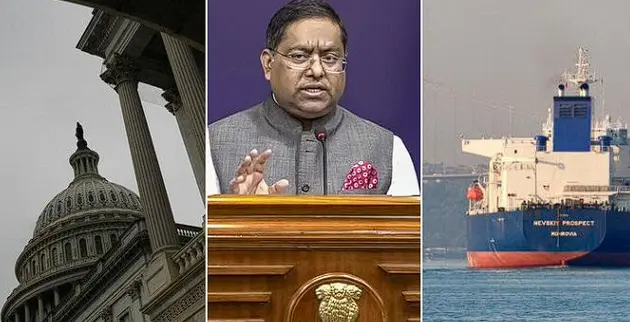
New Delhi: India said on Thursday it is ready to defend its trade and business interests after the US Congress passed a major Russia sanctions law that allows President Donald Trump charge extra taxes of up to 100% on countries, including India and China, for still buying Russian oil and gas.
In a statement, the External Affairs Ministry said the government remained committed to ensuring energy security for 1.4 billion people and would continue to pursue it through diversified sourcing and based on evolving market dynamics.
New Delhi said it has raised the matter in top-level talks with several American officials over the past few months, spelling out how the proposed law could affect both India–US relations and the global energy market, as reported by India Today.
“The Indian side has also made clear its determination to take all necessary measures to protect its trade and economic interests,” the ministry said, adding that it would work closely with trade and industry bodies to deal with the implications of the US move.
Bill Clears US House, Now With Trump
The US House of Representatives on Wednesday gave its nod to the Lindsey O. Graham Sanctioning Russia and Iran Act of 2026 in a 262–159 vote. The measure had earlier cleared the Senate by 86–11 last month and is now headed to the White House, where President Trump is expected to sign it into law.
The new law allows Trump to slap tariffs of up to 100 per cent on major purchasers of Russian oil and gas. India and China were singled out in debates and amendments as key countries that could face such duties.
Supporters say the move aims to block the funds Russia uses to finance its war in Ukraine. The legislation targets Moscow’s energy and defence sectors, as well as a “shadow fleet” of tankers accused of helping Russia bypass existing sanctions.
It also provides for additional sanctions on Iran.
How It Could Hit Indian Goods In US
Just being named in the bill does not mean a 100 per cent tax has been imposed on Indian products. The law only gives Trump the authority to levy such steep tariffs on countries that continue to buy Russian oil and gas, if specified conditions are triggered.
This part is significant for India because the country now buys very large amounts of Russian crude ever since Western sanctions after the Ukraine war reshaped global energy trade.
If Washington decides to use this power against India, the main impact will be on Indian exports to the US. Tariffs of up to 100 per cent could sharply raise the price of Indian goods in the American market, making them less competitive.