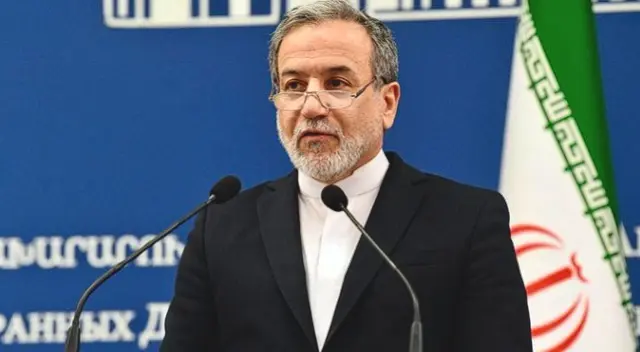
Tehran: Iranian Foreign Minister Abbas Araghchi on Saturday said that the Strait of Hormuz remains accessible to most countries but is restricted for ships linked to the United States and Israel, in the wake of recent US airstrikes on Iran’s key oil facility at Kharg Island.
“As a matter of fact, the Strait of Hormuz is open,” Araghchi said in an interview with MS NOW, as cited by the New York Post. “It is only closed to the tankers and ships belong[ing] to our enemies, to those who are attacking us and their allies. Others are free to pass. And I can say that the Strait is not closed, but it is only closed to American, Israeli, you know, ships and tankers, and not to others.”
The remarks follow US military strikes on facilities at Kharg Island, a critical hub for Iran’s oil exports. The current escalation traces back to February 28, wh
en the US and Israel conducted coordinated attacks on Iranian targets, resulting in the death of Supreme Leader Ali Khamenei, according to reports.
Iran responded with strikes on Gulf nations hosting US bases, which disrupted regional aviation and contributed to volatility in global energy markets. Araghchi noted that some shipping avoids the strait due to independent security decisions. “Of course, many of them prefer not to because of their security concerns. This has nothing to do with us,” he said.
The UK Maritime Trade Operations (UKMTO) has recorded at least 16 vessel attacks in and around the Gulf and Strait of Hormuz since the conflict began.
In response, US President Donald Trump called for international naval support. In a Truth Social post, he urged allies including China, France, Japan, South Korea, and the United Kingdom to deploy warships to protect the vital route and maintain global energy flows.
The Strait of Hormuz, a 21-mile-wide waterway between Iran and Oman, serves as one of the world’s most critical oil chokepoints. Approximately 13 million barrels pass through daily, accounting for about 31% of seaborne oil trade. Security concerns have already slowed maritime traffic, stranding hundreds of vessels in the region.