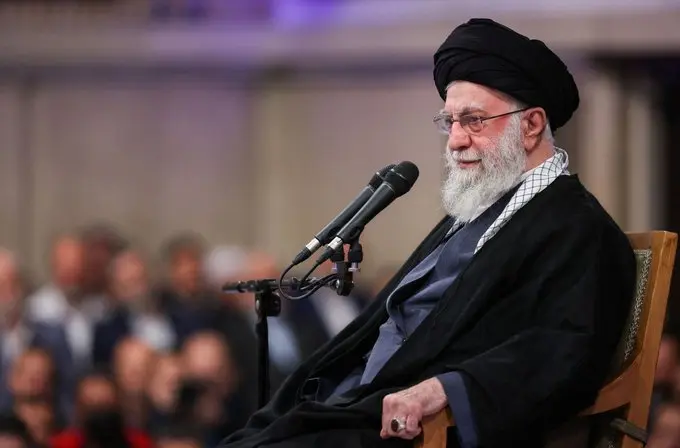
Tehran: Iran’s Supreme Leader Ayatollah Ali Khamenei issued a strong public address on Friday amid the country’s largest anti-government protests in years, accusing demonstrators of acting under foreign influence and warning that the Islamic Republic would not tolerate what he described as “vandalism and sabotage.
He directly targeted US President Donald Trump, calling him “arrogant” and asserting that Trump’s “hands are stained with the blood of Iranians,” while also declaring that Trump would one day be “overthrown,” reported Hindustan Times.
Khamenei insisted that some rioters were attempting to “ruin their own streets to please the President of another country,” a clear reference to US support for the protest movement. State media also amplified claims that Western and Israeli “terrorist agents” are behind the unrest.
Trump had earlier threatened the Iran government over crackdown on protestors. Iran has “been told very strongly, even more strongly than I’m speaking to you right now, that if they do that, they’re going to have to pay hell,” Trump said, reported Hindustan Times.
The US President had also claimed that Khamenei was “looking to go somewhere”, adding that the situation in Iran was “getting very bad.”
What began in late December over a sharp economic downturn and soaring inflation has escalated into widespread protests across Tehran and all 31 Iranian provinces. Demonstrations were ignited by shopkeepers and ordinary citizens frustrat
ed by the collapse of the Iranian rial, which has lost significant value and contributed to the rising cost of living. Slogans chanted in the streets have shifted from economic grievances to political demands, including direct criticism of the clerical establishment.
In response, the Iranian government has imposed a nationwide internet and phone blackout — cutting off most digital communication and access to the outside world. Internet monitoring groups confirmed a dramatic drop in connectivity, a tactic Iran has used in previous waves of unrest to hinder organization and reporting.
Exiled figures have played a role in amplifying dissent. Reza Pahlavi, the exiled crown prince, called on Iranians to take to the streets and demand freedom, a call that many demonstrators appear to have heeded. Protesters have even used slogans referencing the pre-1979 monarchy, despite the severe penalties Iran historically imposed for such expressions.
Casualties, Detentions and Government Response
Rights groups and media reports indicate that at least 40+ people have been killed since the protests began, with thousands detained across numerous cities. Eyewitness footage — some shared before the blackout — shows large crowds chanting and, in some cases, confronting security forces.
Iranian authorities have reacted with force in several locales, and senior officials, aligned with Khamenei’s stance, have stressed that “rioters must be put in their place,” framing the unrest as a security threat rather than legitimate dissent.
International voices, including from European diplomats, have urged Tehran to show restraint, warning that a harsh crackdown could further isolate the Islamic Republic. The unrest underscores the profound internal pressures facing the Iranian leadership — economic stagnation, public frustration, and sustained opposition voices inside and outside the country