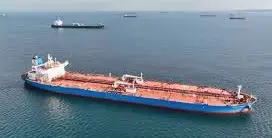
Tehran: Iran’s Islamic Revolutionary Guard Corps (IRGC) on Tuesday announced conditional safe passage through the Strait of Hormuz for select Arab and European nations, escalating pressures in the ongoing regional conflict.
The IRGC stated that only countries expelling Israeli and American ambassadors will receive unrestricted transit rights through the strategic waterway, which carries about 20 per cent of global daily oil supply.
According to Iran’s state broadcaster IRIB, the IRGC specified that nations severing diplomatic ties with both Israel and the United States would enjoy the “full right and freedom” to navigate the strait.
The offer comes as US President Donald Trump warned of severe retaliation if Iran disrupts oil flows. Speaking at a Florida news conference on Monday, Trump said: “I will not allow a terrorist regime
to hold the world hostage and attempt to stop the globe’s oil supply. And if Iran does anything to do that, they’ll get hit at a much, much harder level.”
The announcement coincides with soaring oil prices above $100 per barrel resulting from the near-shutdown of the Strait of Hormuz and reduced Middle East production amid the Iran war.
In a related move, Trump announced temporary relief on oil sanctions. “We’re also waiving certain oil-related sanctions to reduce prices,” he told reporters after talks with Russian President Vladimir Putin, while mentioning Chinese President Xi Jinping. “We’re going to take those sanctions off till this straightens out.”
No nation has so far responded to the IRGC’s conditional proposal, first reported by IRIB and echoed in outlets like Tehran Times and international wires. The Strait of Hormuz remains a flashpoint, with Iran vowing to target non-compliant vessels.
The war erupted on February 28 when the US and Israel launched joint airstrikes on Iran, killing Supreme Leader Ali Khamenei and top officials in a bid for regime change. Iran retaliated with missile and drone barrages on Israel, US bases, and Gulf allies like Saudi Arabia, UAE, and Qatar crippling oil flows and spiking global prices.