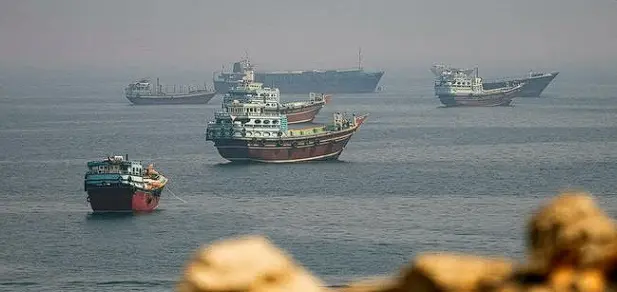
Tehran: Iran has made clear it will not lift restrictions on the Strait of Hormuz or revive the earlier negotiation track with Washington unless the United States first satisfies Iran’s stipulated demands, according to Parliament Speaker Mohammad Bagher Ghalibaf, as friction between the two rivals intensifies.
Iran has already transmitted its list of requirements to American officials via third-party channels and will not budge from this stance until those terms are honoured, Ghalibaf stated.
‘No Return To Old Framework’
“Our messages and conditions have been conveyed explicitly to the other side through intermediaries. And until these conditions are met, the inalienable rights of the Iranian nation are recognised, and the Americans fulfil their commitments, there will be no possibility of a return to the previous negotiation framework or to reopen the Strait of Hormuz,” he said.
The Strait of Hormuz, which channels a substantial share of the world’s seaborne oil, has turned into a principal arena of the standoff, with curbs on shipping fuelling alarm over potential shocks to energy markets and global commerce.
Military Warns Of ‘Painful’ Retaliation
Ghalibaf’s comments followed a fresh warning from Iran’s top military command that any fresh American strike or provocation would invite retaliatory hits on US installations and assets throughout the region, as reported by The New Indian Express.
In a statement disseminated by state news agency IRNA, the Khatam al-Anbiya Central Headquarters said any US military action would be met with “continuous, effective and painful” attacks.
Merchant Vessels Rerouted
Meanwhile, the US Central Command reported that its naval forces have rerouted 109 merchant ships as part of the ongoing enforcement of Washington’s maritime blockade targeting Iranian ports.
“A U.S. Sailor stands watch aboard USS John Paul Jones (DDG 53). As of Sept. 20, CENTCOM forces have redirected 109 commercial vessels to ensure total compliance,” CENTCOM said in a post on X.
American forces restarted blockade operations against vessels moving in and out of Iranian harbours on July 14.
President Donald Trump has cautioned Iran of serious repercussions if it does not change course, but has also signalled he may be willing to hold talks with Iranian President Masoud Pezeshkian on the sidelines of the UN General Assembly in New York.
Earlier, Iranian security official Mohsen Rezaei said Tehran had passed on its conditions for ending the conflict through Qatari mediators, calling for a halt to fighting across all fronts, the unfreezing of Iranian assets, and the lifting of the naval blockade.
The escalation unfolds as heads of state converge on New York for the UN General Assembly, where the US–Iran confrontation and broader West Asian tensions are expected to dominate diplomatic exchanges.