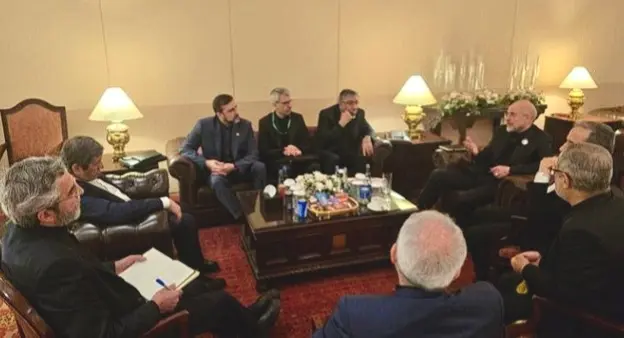
Islamabad: Iran affirmed on Sunday that negotiations with the United States would carry on despite the latest impasse, stressing it is “in no hurry for a deal” after extended talks hosted in Pakistan concluded without any agreement between Tehran and Washington.
According to Tasnim news agency, US negotiators, headed by Vice President JD Vance, exited Islamabad following the breakdown of peace discussions between Washington and Tehran, prompting Iran’s Foreign Ministry to signal patience.
Tasnim, quoting an informed source, reported that “Iran is not in a hurry for negotiations.”
Foreign Ministry spokesperson Esmaeil Baqaei emphasized continuity, declaring: “Confident that contacts and consultations between Iran, Pakistan and ‘our other friends’ in the reg
ion will continue.”
Baqaei dismissed notions of rapid resolution in remarks to state broadcaster IRIB: “Naturally, from the beginning we should not have expected to reach an agreement in a single session. No one had such an expectation.”
The ministry clarified there were never high hopes for swift success, with Baqaei telling state broadcaster IRIB: “Naturally, from the beginning we should not have expected to reach an agreement in a single session. No one had such an expectation.”
The Iranian Embassy in Japan reinforced Tehran’s measured approach in a post on X, stating: “A couple of points on the latest in Islamabad: You cannot secure through diplomacy what you failed to gain through military aggression; The assertion of a ‘best and final offer’ that JD Vance raised in his press conference is inherently reciprocal; it cannot be a unilateral mandate or a weapon to be used by one side.”
Iranian President Masoud Pezeshkian had earlier indicated Tehran’s committed stance, saying Iran entered the ongoing negotiations with the US with “determination and seriousness,” while adding that the outcome of the talks would ultimately depend on Washington’s approach.