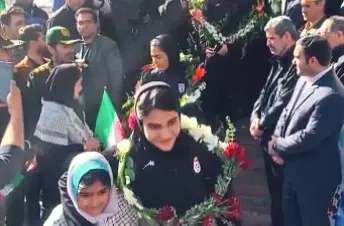
Melbourne: Of seven Iranian women’s football team members who applied for asylum in Australia amid the Women’s Asian Cup, five later returned home with their squad, sparking debate over the process, AP reported.
The issue arose after players did not sing the Iranian national anthem before their March 2 match. Iranian commentator Mohammad Reza Shahbazi described them as “wartime traitors” on television, fueling protests. On March 10, Immigration Minister Tony Burke shared a photo of five women — four players and a team manager — accepting protection visas. They appeared without head coverings and agreed to media release of their names and images.
US President Donald Trump commented on social media and spoke with Prime Minister Anthony Albanese, who noted the visas had been granted. Two players, Fatemeh Pasandideh and Atefeh Ramezanisheh, remained in Australia. The others reunited with the team in Kuala Lumpur, traveled via Oman and Turkey, and received a welcome in Iran. Midfielder Fatemeh Shaban said to a crowd: “We are so happy to be in Iran, because Iran is our homeland.”
Refugee advocates expressed concerns about the handling. Graham Thom, advocacy coordinator for the Refugee Council of Australia, s
tated: “We ended up with an outcome that is certainly far from ideal. Hopefully the two who are remaining get the protection they need, but we just hope that those who have returned are also safe.”
Kylie Moore-Gilbert, a Macquarie University political scientist detained in Iran from 2018 to 2020, told the Australian Broadcasting Corporation: “Had these women quietly sought asylum without that publicity around them, it’s possible that the Islamic Republic officials might have, as they have in the cases of other Iranian sportspeople in the past who’ve defected … simply allowed that to happen.”
Deakin University professor Shahram Akbarzadeh commented: “Sometimes frustration overrides fear of consequences. Unfortunately for these players, their act of defiance turned into a symbol of resistance against the regime and basically a cause to be played by the United States and the Iranian diaspora who were anti-regime to humiliate and embarrass the regime and to basically gain a political score from the situation.”
Iran’s foreign ministry spokesman Esmaeil Baghaei told ABC the five were not voluntary seekers: “They didn’t seek asylum. They were forced to. They were coerced to. They didn’t do it voluntarily.” He described Australian actions as a “shameful, sham posture” and questioned the two stayers’ status.
Assistant Immigration Minister Matt Thistlethwaite noted: “These are deeply personal decisions, and the government respects the decisions of those that have chosen to return. And we continue to offer support to the two that are remaining.” He called the situation “very complex.”