Bhubaneswar: As protests intensify and demands for Union Education Minister Dharmendra Pradhan’s resignation grow louder amid the NEET-UG 2026 paper leak controversy, an incident from nearly three decades ago has resurfaced, drawing sharp attention on social media and in political circles.
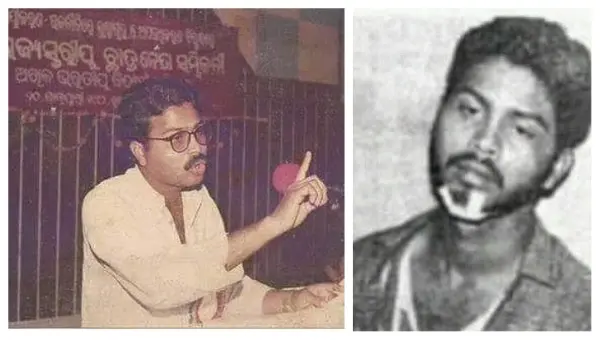
Images and accounts from a 2021 report by The New Indian Express,, detailing Dharmendra’s own past as a student activist fighting against a question paper leak in Odisha in 1990s have gone viral online, creating a stark political parallel that has drawn both praise for his early activism and sharp criticism over his current administrative challenges.
The resurfaced accounts trace back to 1997, when Dharmendra served as the National Secretary of the Akhil Bharatiya Vidyarthi Parishad (ABVP). At the time, an alleged competitive examination paper leak sparked widespread outrage in Odisha under the Congress-led government of Chief Minister Janaki Ballabh Patnaik.
Dharmendra led a demonstration of around 1,500 students in front of the state secretariat in Bhubaneswar to demand an investigation and institutional accountability.
Former associates and college juniors, including Principal of RMD Degree College in Bhubaneswar Prashant Rout, recalled that what began as a peaceful rally escalated when police launched a lathi charge to disperse the crowd. Dharmendra was severely beaten during the crackdown and suffered multiple fractures. “We were quite scared. Pradhan was badly beaten up that time. He had a few fractures too,” Rout was quoted as saying
This ordeal ultimately established his reputation for resilience and propelled his rise within the student movement and the Bharatiya Janata Party. Over the years, he contributed significantly to strengthening the party’s grassroots presence in the state, playing a key role in the BJP’s eventual formation of its first government in Odisha in 2024, ending the long dominance of Naveen Patnaik’s Biju Janata Dal.
The resurgence of Dharmendra’s 1997 protest highlights a striking full-circle moment in Indian politics, contrasting a young student leader’s fight against paper leaks with the intense scrutiny he now faces in safeguarding the integrity of national examinations.
The current crisis surrounding NEET-UG 2026 has triggered massive protests, including at Jantar Mantar in Delhi, involving students, parents, opposition leaders, and activists from groups like the Cockroach Janta Party (CJP). Opposition parties, including Congress, have insisted on Dharmendra’s resignation as a precondition for any parliamentary discussion on the matter, with leaders like Mallikarjun Kharge and Rahul Gandhi amplifying the calls.
The government has maintained that it is prepared for debate, with senior BJP figures such as JP Nadda and Kiren Rijiju asserting that investigations are underway and there is nothing to hide. Some allies, like Ramdas Athawale, have argued that resignation is unnecessary as action has been taken against culprits. Yet, the issue has become highly charged, with reports of police action against protesters, injuries, and hospitalisations adding to the tensions