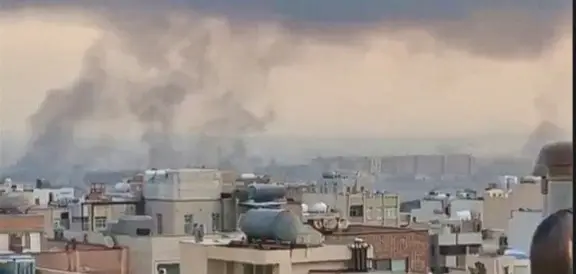
Jerusalem/Dubai: Israel hammered Iran with new airstrikes on Friday, threatening to “escalate and expand” its campaign after US President Donald Trump extended a deadline for Tehran to reopen the Strait of Hormuz. With no clear indication that Iran is preparing to back down, fears are mounting that the conflict could spiral further, triggering broader economic and military consequences across the Middle East and beyond, AP reported.
The closure of Strait of Hormuz has already sent shockwaves through global markets. The United States has reportedly put forward a 15‑point ceasefire plan that includes the requirement for Iran to relinquish control of the waterway, while also moving thousands more troops into the region — a move widely interpreted as preparation for a possible military attempt to force the Strait open.
Trump had initially set a firm deadline for Iran to reopen the Strait, threatening to destroy the country’s energy infrastructure if Tehran failed to comply. On Thursday, however, he pushed that deadline back to April 6, telling reporters that negotiations on ending the conflict were progressing “very well.” Iran has repeatedly insisted it is not engaged in any formal negotiations with Washington.
In Israel, air raid sirens sounded again on Friday as the military said it was working to intercept Iranian missiles, a scene that has become almost daily since the latest phase of hostilities began. Israel’s Defense Minister,
Israel Katz, accused Iran of committing a “war crime” and warned of escalating retaliation.
“Despite the warnings, the firing continues,” Katz said. “And therefore attacks in Iran will escalate and expand to additional targets and areas that assist the regime in building and operating weapons against Israeli citizens.”
Israel’s military stated that its strike on Friday targeted facilities “in the heart of Tehran” used to produce ballistic missiles and other weapons, as well as missile launchers and storage sites in western Iran.
Smoke could be seen rising over Beirut after a pre‑dawn Israeli airstrike in southern Lebanon, where the Health Ministry later reported that two people had been killed.
Meanwhile, Iran continued to fire missiles and drones at its Gulf Arab neighbours, prompting air‑raid sirens in Bahrain, Qatar, and the United Arab Emirates.
Saudi Arabia’s Defence Ministry announced that it had shot down both missiles and drones targeting the capital, Riyadh.
Kuwait said that both its Shuwaikh Port in Kuwait City and the Mubarak Al Kabeer Port to the north — under construction as part of China’s “Belt and Road” initiative — had sustained “material damage” in attacks believed to be linked to Iranian‑launched drones. It marked one of the first clear instances of a Chinese‑linked project in the Gulf being hit amid the war, even as China has continued to purchase Iranian crude.
After Wall Street posted its worst day since the war began, Asian stock markets mostly fell on Friday on growing skepticism that any quick diplomatic breakthrough was in sight. Oil prices climbed again, with Brent crude — the global benchmark — reaching 107 dollars a barrel in early trading, a rise of more than 45 per cent since Israel and the United States first attacked Iran on February 28 to start the war.