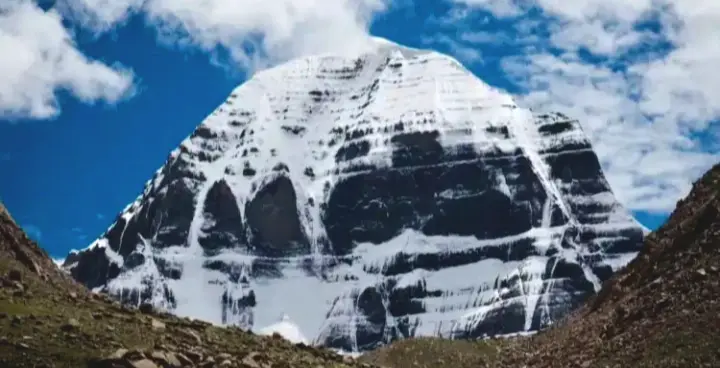
New Delhi/Kathmandu: Even as India and China prepare to conduct the Kailash Mansarovar Yatra 2026, Nepal has thrown a spanner in the works by saying that it will not allow passage through the Lipulekh Pass as the route passes through territory it claims as its own.
Lipulekh is a wind-swept pass beyond Uttarakhand’s high mountains that leads to Tibet, where the pilgrimage site is located. This route has been used by Indian pilgrims for decades
The dispute has to do with the Treaty of Sugauli, signed in 1816 after the Anglo-Nepalese War. The treaty fixed Nepal’s western boundary along the Kali river. That single line, however, came with an unresolved question that continues to haunt maps even today. Where exactly does the Kali river begin?
Kathmandu’s position is clear. It argues that the river originates at Limpiyadhura, further northwest than the point identified by India near Lipukhola (close to Lipulekh), as reported by India Today.
Historical maps from the 19th century show the Kali river originating at Limpiyadhura, Nepali scholars argue. Later cartographic changes gradually shifted the boundary eastward, they claim.
If Nepal’s stand is to be accepted, then Limpiyadhura, Kalapani, and Lipulekh all fall within Nepal’s territory.
New Delhi, however, rejects the above interpretation and maintains that their position aligns with historical usage and administrative control. It places the river’s origin near Lipukhola (close to Lipulekh), which brings the same stretch under Indian control.
This is not just a cartographic disagreement. It shifts control over a strategically sensitive tri-junction between India, Nepal, and China.
Limpiyadhura, Lipulekh, and Kalapani are integral parts of Nepal, the country’s foreign ministry has reiterated. It has “taken note” of the planned Mansarovar Yatra through the pass and formally conveyed to both India and China that the route lies in territory it claims, the ministry has said.
Kathmandu says it has repeatedly urged India in the past not to carry out activities in the area, whether road construction, trade, or now pilgrimage routes.
For Nepal, the yatra brings something extra — visibility.
When India and China organise and announce a structured pilgrimage route through Lipulekh, it creates an impression that the territory is settled and firmly outside Nepal’s jurisdiction. For Kathmandu, it normalises the status quo and weakens its negotiating position, as reported.
Nepal has also claimed that it was not consulted before the route was finalised, even though it claims the land. In a region where sovereignty is closely tied to participation, being excluded matters.
Nepal’s 2020 constitutional map included Limpiyadhura, Lipulekh, and Kalapani, but India did not respond with the alacrity it should have.
India has now firmly rejected Nepal’s position, calling it a unilateral and artificial enlargement of claims.
New Delhi points out that the Lipulekh Pass has been used as a route for the Kailash Mansarovar Yatra since 1954, with Indian pilgrims travelling through this corridor for decades.
The current plan is not a new assertion but a continuation of an established practice, from India’s perspective.
India has also reiterated that all outstanding boundary issues with Nepal should be resolved through bilateral dialogue, but not on the basis of what it sees as revised interpretations of historical agreements.
For India, the pass is a strategic access point to Tibet and an established pilgrimage route. For Nepal, it is a question of sovereignty rooted in the Treaty of Sugauli. China will be smiling secretly, given its stand on the border with India.