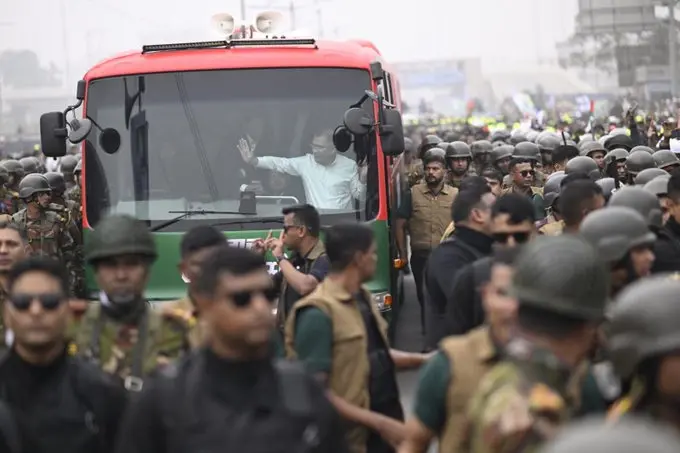
Dhaka, Bangladesh: Tarique Rahman, the acting chairman of the Bangladesh Nationalist Party (BNP) and a prominent opposition leader, has returned to Bangladesh on Thursday after nearly 17 years in exile, according to various media reports.
Rahman, who has lived in London since 2008, arrived in Dhaka on a flight from London, marking the end of his long absence from his home country. His return comes at a pivotal moment in Bangladesh’s political landscape, with a general election scheduled for February 2026. From the airport, Rahman is headed to 300 Feet in Purbachal where he will address a rally, reported Hindustan Times. Reports claimed he thanked Chief Adviser of the interim government of Bangladesh, Muhammad Yunus, over the phone.
Hundreds of thousands of supporters lined the route from Hazrat Shahjalal International Airport to the reception venue in the capital, waving party flags and chanting slogans welcoming him. Senior BNP leaders received Rahman under tight security, as large crowds gathered to witness his homecoming.
BNP working chief Tarique Rahman reaches Dhaka after a 17-year exile.
It was Sheikh Hasina’s grave mistake to deny BNP any political space. She has paid a very heavy price for that.
Hope Tarique, likely to sweep Bangladesh polls, won’t repeat that mistake by banning Awami League. pic.twitter.com/MOuxJqSseH
— Abhijit Majumder (@abhijitmajumder) December 25, 2025
As the heir to one of Bangladesh’s most influential political families, Rahman is widely considered a top prime ministerial contender ahead of the upcoming election. His mother, former Prime Minister Khaleda Zia, who has been seriously ill, is expected to be visited by her son following his arrival.
Rahman’s exile began after he left Bangladesh in 2008, soon after facing various criminal convictions, including charges of money laundering and involvement in an alleged plot against then-prime minister Sheikh Hasina. Those convictions were later overturned, removing legal barriers that had prevented his return.
His homecoming reflects a major shift in the country’s political dynamics, coming after the 2024 ouster of Sheikh Hasina and amid efforts by the interim government to manage a fragile democratic transition.