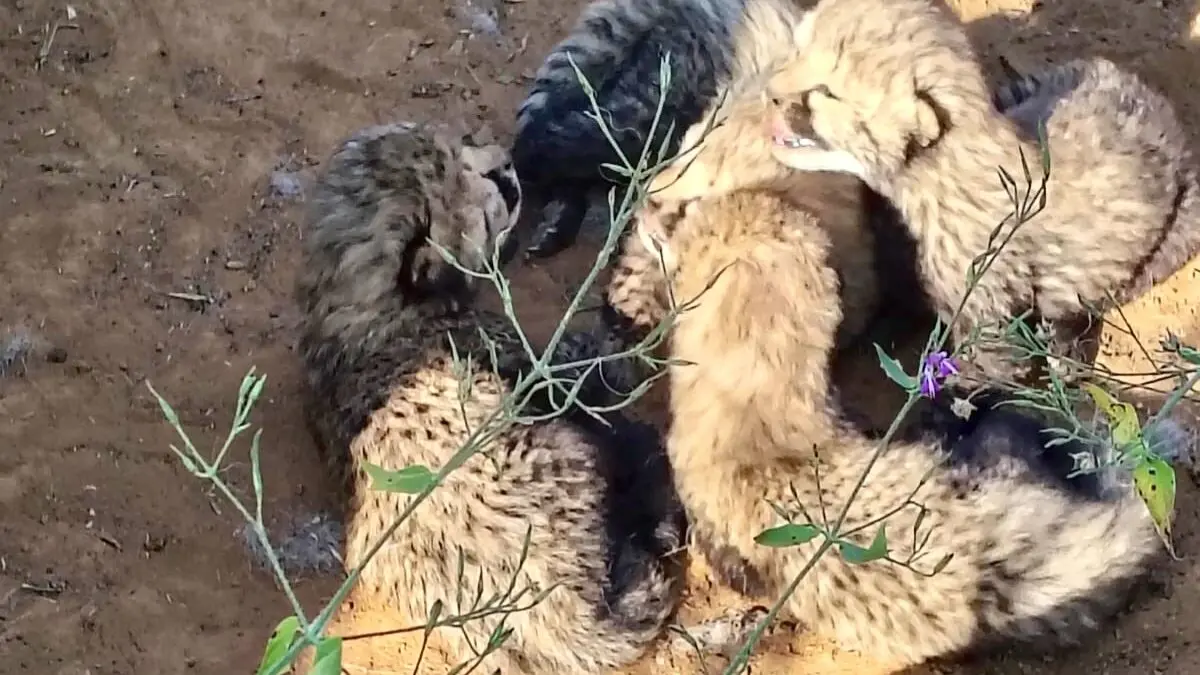
Sheopur: India’s Project Cheetah programme reached another milestone on Friday, after a female from Botswana gave birth to four healthy cubs in the wild.
This took the country’s total cheetah population to 62. Of these, 43 were born in India.
The development was announced by Union Minister of Environment, Forest and Climate Change of India, Bhupender Yadav, during the day.
The mother was identified as KOMG 3, a two-and-a-half-year-old female, who also became the first Botswana-origin female to give birth in India.
The birth is particularly significant because KOMG 3 spent more than four months living in the wild before giving birth under natural conditions, as reported by India Today.
It is also only the second recorded instance of a cheetah giving birth in the wild since Project Cheetah began in 2022.
The previous recorded wild birth took place on April 11, 2026, when KGP12, a female cheetah born in India to South African cheetah Gamini, gave birth to four cubs at the Kuno National Park in Madhya Pradesh.
That was the first time a second-generation cheetah, born in India, had successfully reproduced in the wild.
The growing number of Indian-born cheetahs is an important indicator of the programme’s progress towards establishing a population that can reproduce and survive under natural conditions.
Launched on September 17, 2022, Project Cheetah is India’s effort to bring back the world’s fastest land animal, which was declared extinct in the country in 1952.
The initiative involved bringing cheetahs from Africa to India, making it the world’s first intercontinental transfer of a large carnivore.
The first eight cheetahs arrived from Namibia in September 2022, followed by 12 from South Africa in February 2023. Nine more cheetahs were subsequently brought from Botswana in 2026.
While Kuno National Park serves as the programme’s primary home, with efforts also underway to expand the population to other suitable habitats.
The latest birth adds another generation to India’s growing cheetah population, bringing the country closer to its goal of restoring a viable population of the species.