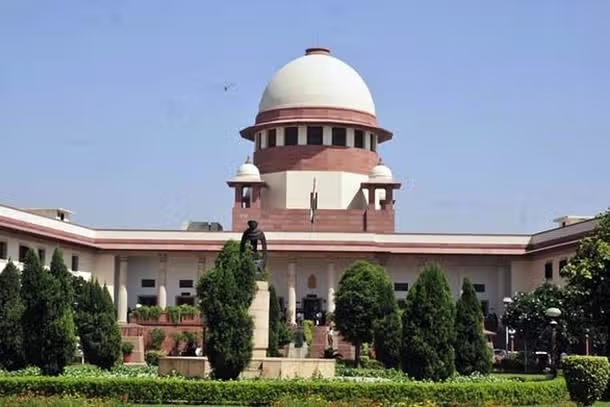
New Delhi: The Supreme Court indicated on Friday that it may relax the absolute ban on firecrackers in Delhi–NCR during Diwali, giving tentative approval to limited use under prescribed conditions.
A bench headed by Chief Justice of India B.R. Gavai with Justice K. Vinod Chandran reserved its order after listening to arguments, signalling willingness to permit fireworks for a brief period around the festival.
What the court said and proposed limits
The court observed it would “for the time being … permit the ban lifting during Diwali,” but stressed that this would be subject to strict time limits.
The Center, through Solicitor General Tushar Mehta, sought flexibility, asking children should not be restricted to only two hours of celebration.
Under government proposals, permitted windows include 8 pm–10 pm on Diwali and other major festivals; 11:55 pm–12:30 am for New Year’s Eve; and limited one-hour slots for Gurpurab.
Firecracker use might also be allowed for weddings and private occasions, within the time bands.
The court also raised questions about the effectiveness of “green crackers,” asking whether any measurable improvement in air quality had been observed between 2018 and 2024.
Amicus Curiae Senior Advocate Aparajita Singh flagged issues with fake “green crackers” labeled as eco-friendly yet containing harmful chemicals.
Environmental alarm raised
Experts caution that even “green crackers,” though up to ~30% less polluting, can cause temporary spikes in air pollution — especially when combined with stubble burning and stagnant weather conditions.
Sunil Dahiya of Envirocatalysts warned that resuming firecrackers may undermine a decade’s progress in Delhi’s air quality battle.
Historical evidence between 2018–2020 showed that restrictions on regular crackers and substitution with green varieties produced no significant drop in pollution levels.
The SC’s decision—expected soon—could restore a Diwali breathing window for residents while balancing the region’s fragile air quality trajectory.
Critics argue that implementing timed fireworks, even briefly, risks “episodic” pollution surges that may linger for days under adverse conditions.