Cairo: Diplomatic intermediaries are continuing to work with Tehran and Washington on a possible agreement to halt the fighting and restore access through the Strait of Hormuz, despite President Donald Trump’s public dismissal of Iran’s latest offer, according to three regional officials and a senior US official who spoke to The Associated Press.
Indirect negotiations were expected to resume on Monday as the conflict entered its eighth month. The prolonged confrontation has caused major disruption to the global economy and severely damaged Iran, while repeated attempts to guarantee safe passage through the strategic waterway have failed.
The officials said the diplomatic efforts had not stopped after Trump rejected an Iranian proposal that offered to reopen the strait within seven days. Tehran’s plan reportedly called for the United States to end its blockade of Iranian ports, unfreeze Iranian assets and suspend sanctions affecting the country’s oil exports, among other demands.
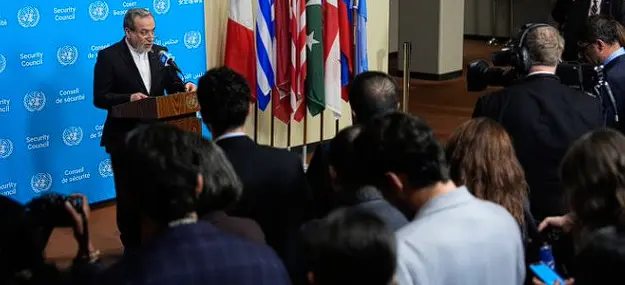
Iranian Foreign Minister Abbas Araghchi remained in New York following last week’s UN General Assembly meetings. He said he was waiting for mediators to give him “definitive” confirmation that Trump had rejected the proposal. Qatar has been helping facilitate the discussions.
The senior US official said Trump remained willing to consider a diplomatic settlement, despite his frequently aggressive public statements, provided a deal could be reached without military action. The official, however, said Washington remained uncertain about whether Tehran would eventually accept the conditions demanded by the US president.
The officials were not authorised to speak publicly about the confidential negotiations and therefore requested anonymity.
Hormuz Deal Comes First
Two of the regional officials said mediators were working on a framework that would begin with the reopening of the Strait of Hormuz and the removal of the US blockade, before moving towards the lifting of sanctions.
A draft under discussion would allow Iran to reopen the waterway under a separate arrangement it has been negotiating with Oman, which lies on the opposite side of the strait. The proposed arrangement would temporarily regulate shipping through the waterway, which was regarded as international before the war, and would not impose tolls — a demand Tehran has repeatedly made.
The US has not formally rejected the proposal, officials said, suggesting that Trump’s public remarks may have been aimed at gaining leverage in the talks.
Washington is also seeking concessions on Iran’s nuclear programme, including access for international inspectors. A June agreement to discuss the programme over 60 days collapsed within days.
Officials gave mixed assessments of the negotiations. One reported positive signals, another said there had been “slight progress”, while a third said mediators were trying “to soften” the positions of both sides.
The White House did not immediately comment.
Iran Seeks Swift Action
Tehran’s latest proposal is similar to the June plan but calls for faster implementation.
Iranian Foreign Minister Abbas Araghchi said the deal could benefit Trump ahead of the US midterm elections. He later told reporters, “the seven-day timeline will start as soon as the United States accepts this plan.”
Both countries are facing economic pressure. The US is dealing with higher oil prices after attacks on ships in the strait, while Iran is struggling with the blockade and sanctions limiting its oil sales. Brent crude was above $108 a barrel.
The two sides have spent months trying to force concessions from each other, while regional countries face missile and drone attacks. Iran says it is targeting US military positions.
A rare statement attributed to Iran’s Supreme Leader Ayatollah Mojtaba Khamenei referred to the “painful blows” suffered by enemy forces near the strait. “Before long, the Arabian Sea, too, will be rid of them,” it said.
Iran’s proposal also seeks an end to fighting on all fronts, including Lebanon. But the conflict has widened, with Iran-backed Houthi rebels in Yemen now near the Bab el-Mandeb Strait, increasing pressure on global energy markets.
Iran says the Houthis have separate demands and that their conflict with Saudi Arabia is unrelated to the US-Iran war. However, Tehran is willing to help seek a settlement between the Houthis and Saudi Arabia, an official said.