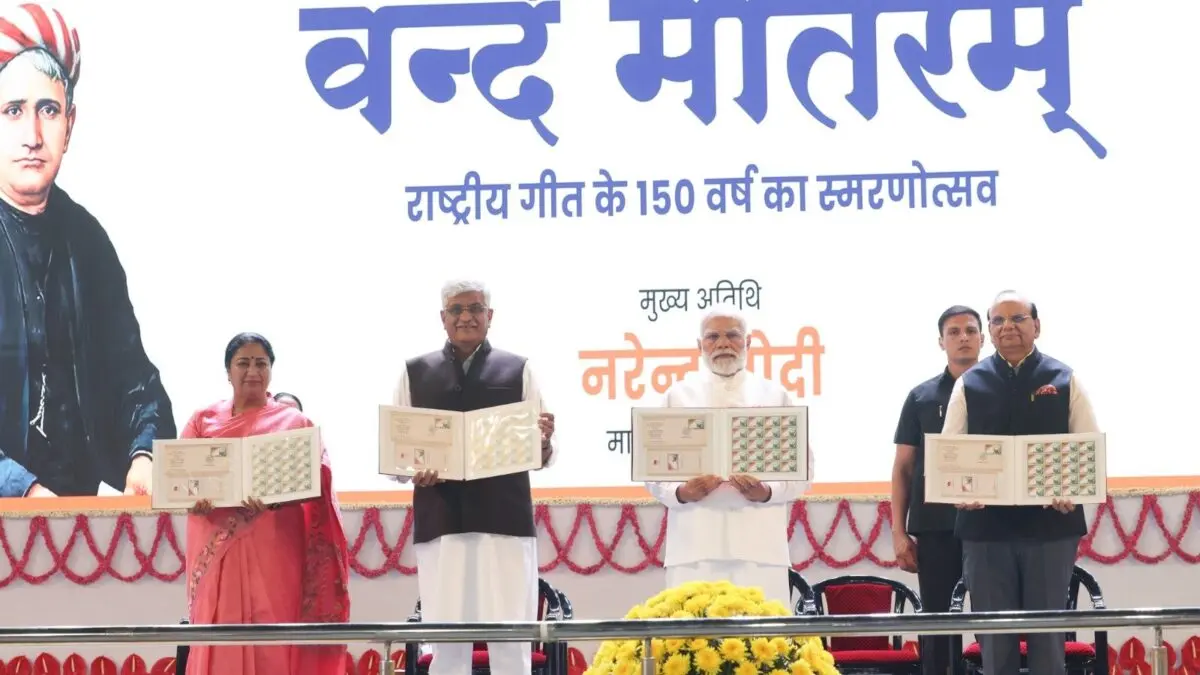
New Delhi: Prime Minister Narendra Modi on Thursday alleged that crucial stanzas of Vande Mataram were removed in 1937, accusing the then Congress leadership of “breaking the song into pieces” and weakening its unifying spirit. Speaking at the 150-year commemoration of the national song at Delhi’s Indira Gandhi Indoor Stadium, Modi said the verses praising Maa Durga were deliberately excluded, calling the move a “historic mistake” that “sowed the seeds of division.”
The Prime Minister described Vande Mataram as a “mantra of unity and courage,” symbolising India’s enduring strength and devotion to the motherland. He said the song had long served as an anthem of inspiration for India’s youth and freedom fighters.
Earlier, BJP spokesperson C.R. Kesavan cited letters written by Jawaharlal Nehru in 1937 — including one to Subhas Chandra Bose — to claim that Nehru had objected to the stanzas invoking a goddess, suggesting they could “irritate Muslims.” Kesavan called the omission a “historic blunder” by the Congress and said it reflected a “Hindu-virodhi mindset.”
Kharge’s Sharp Response
Reacting strongly, Congress president Mallikarjun Kharge accused the BJP and RSS of hypocrisy, alleging they “never sing Vande Mataram or the national anthem” in their offices or shakhas. “Those who have never sung Vande Mataram now lecture us on patriotism,” he said, claiming the Congress has sung the national song at every party function since 1986.
Kharge also accused the RSS of having “stood with the British” during the freedom struggle and questioned its commitment to national symbols.
Historical Debate Rekindled
Written by Bankim Chandra Chatterjee in his 1882 novel Anandamath, Vande Mataram became a rallying cry during the independence movement. The current debate has reignited long-standing questions about the song’s religious imagery and its political interpretation.
As India celebrates 150 years of Vande Mataram, the row has brought the nation’s most iconic anthem back to the centre of political discourse — with both the BJP and Congress invoking history to shape their narratives of patriotism.