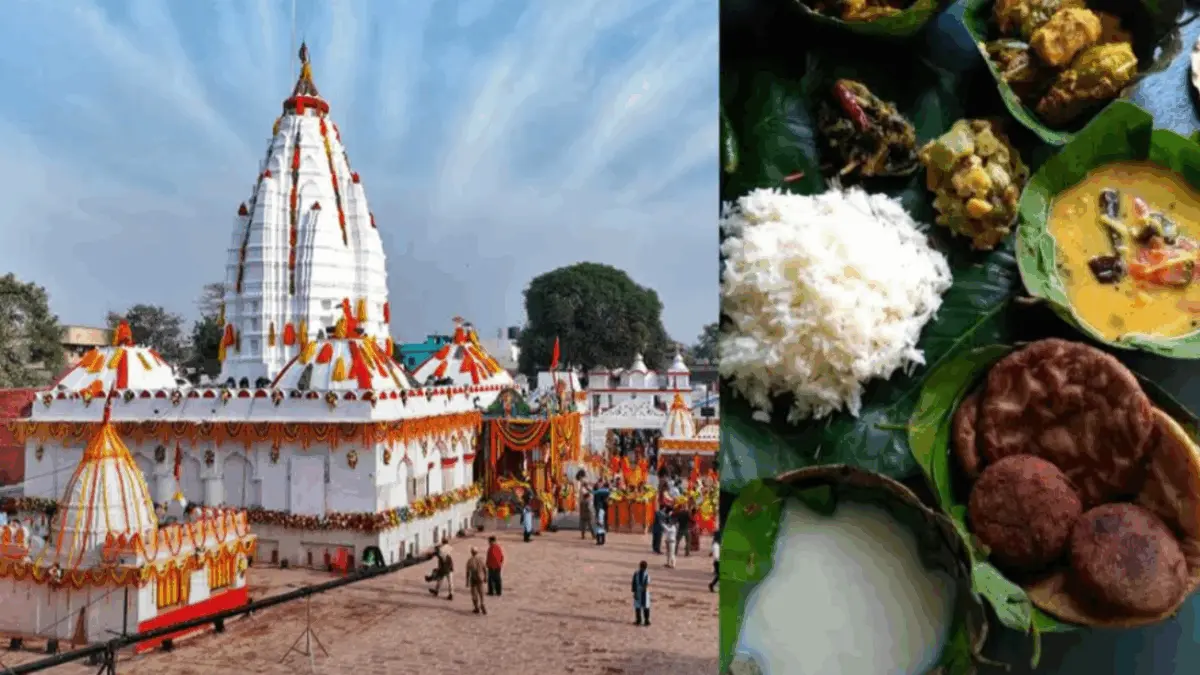
Sambalpur: As entire western Odisha came alive with festive spirit amid Nuakhai celebrations on Tuesday, Nabanna was offered to the Goddess at Samaleswari Temple in Sambalpur.
People across towns and villages celebrated Nuakhai, the major agrarian festival in the western region marking the ceremonial consumption of the season’s first new rice.
The Nabanna offering was made at the pre-determined auspicious time between 9.40 am and 9.54 am. A large number of devotees gathered at the temple as preparations for the agrarian festival were completed.
Following the Nabanna offering to Maa Samaleswari, people began consuming the new harvest in their homes as part of the traditional Nuakhai celebrations.
The ritual marks an important part of Nuakhai celebrations as the first harvest is offered to the presiding deity before people consume the new crop.
Celebrated a day after Ganesh Chaturthi during the Odia month of Bhadraba, Nuakhai holds deep cultural and agricultural significance in western Odisha. The word ‘Nuakhai’ comes from ‘Nua’, meaning new, and ‘Khai’, meaning to eat. The festival is seen as an expression of gratitude for the harvest and a celebration of prosperity, family and community.
Nuakhai has been celebrated since ancient times and remains closely linked with farming, farmers and nature.
The festival is part of a wider cycle of traditional practices associated with cultivation. From Akshaya Tritiya, when farmers perform the Akhimuthi Anukula ritual, to harvesting paddy and bringing it home, several festivals mark different stages of farming.
Nuakhai also has a close connection with nature. Different communities use different varieties of forest leaves as part of their traditional celebrations.
The blooming of different varieties of wild flowers adds to the natural setting during the festival. These traditions reflect the deep connection between Nuakhai, farming and nature, while the Nabanna offering remains at the heart of the celebration.
Beyond its agricultural roots, Nuakhai reflects the strong cultural identity and social traditions of western Odisha. People dressed in traditional clothes exchanged greetings and gifts and sought blessings from elders.
The festival also carries a wider message of gratitude towards nature. For farming communities, the new harvest is closely linked to rainfall, fertile land and the forces of nature.