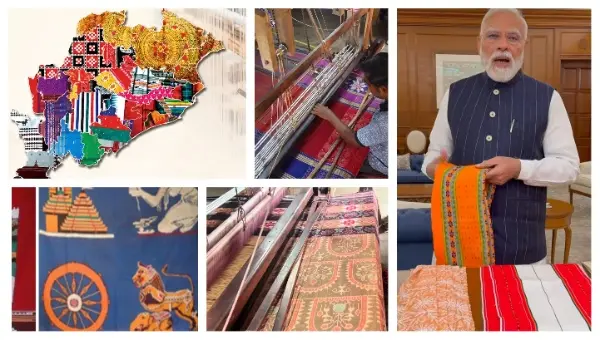
New Delhi/Bhubaneswar: As India marks the 12th National Handloom Day, attention has turned to Odisha’s rich weaving legacy, with the state home to 10 Geographical Indication (GI)-tagged handloom products that embody centuries of craftsmanship and cultural heritage.
The day, observed annually on August 7 to commemorate the launch of the Swadeshi Movement in 1905, celebrates the skills of over 35 lakh weavers and allied workers across the country, more than 70 per cent of them women, while encouraging greater public support for indigenous textiles.
Prime Minister Narendra Modi amplified the call through an Instagram video shared ahead of the occasion. In the reel, he was seen handling various handloom fabrics from different regions and urged youngsters and citizens to popularise India’s handloom diversity by posting videos of their favourite products, including “Get Ready With Me” (GRWM) videos featuring handloom outfits.
“Let’s make India’s handloom diversity popular. Share your videos with your favourite handloom products, including GRWM videos on social media. Don’t forget to use #NationalHandloomDay,” he said, linking the celebration to the spirit of self-reliance and support for weaver families.
He also recalled the historical significance of August 7, 1905, when the Swadeshi Movement began, and encouraged people to buy at least one handloom product to boost livelihoods.
Interestingly, Modi had presented an exquisite Odisha Ikat handloom to Indonesian Parliament Speaker Puan Maharani during his recent visit, spotlighting India’s rich textile heritage on the global stage. He also wore an Odisha Bandha uttariya when he recently shared a Gen Z-styled Instagram Reel using casual vertical selfie videos.
A Glorious Legacy of 10 GI-Tagged Weaves
Odisha stands out in this national narrative. The state’s handloom sector is a testament to generations of weavers who have preserved intricate techniques, from resist-dyeing to tribal embroidery. Its 10 GI-tagged products reflect unique regional identities and sustainable practices. These weaves, protected under the GI Act, range from the earthy, naturally dyed Kotpad cottons of Koraput—using aal root dyes and tribal motifs—to the vibrant double-ikat Sambalpuri bandhas of western Odisha featuring conch, wheel and floral designs; the ceremonial Bomkai with heavy pallus; the temple-associated Khandua silks of Nuapatna; the tribal Habaspuri of Kalahandi; the zari-bordered Berhampur Patta; the forest-linked Gopalpur Tussar; and the embroidered Kapdaganda shawls of the Dongaria Kondh community. Official state channels have highlighted nine or more of these as living symbols of tradition, elegance and identity that continue to find contemporary fashion appeal.
Kotpad Handloom Fabric: Sustainable, earthy cottons from Koraput dyed organically using roots of the Aal tree with distinct tribal motifs.
Odisha Ikat: World-renowned double-resist tie-dye marvels featuring symmetrical geometric patterns and rich cultural motifs.
Sambalpuri Sarees & Fabrics: Celebrated globally for their brilliant interplay of warp and weft tie-dye techniques.
Bomkai Sarees and Fabrics: Renowned for their heavy pallus and brilliant fusion of ikat bodies with extra-weft temple embroidery.
Khandua Sarees and Fabrics: The sacred silk drapes of Nuapatna traditionally offered to Lord Jagannath in Puri.
Dhalapathar Parda and Fabrics: Unique curtain and fabric materials featuring distinct checks and structural designs from Khordha.
Habaspuri Sarees: Rare, endangered cotton drapes from Kalahandi carrying intimate tribal artistry and earthy aesthetics.
Brahmapur Patta (Phoda Kumbha): Distinguished by its unique temple-tapped borders and heavy zari-woven silk textures (Joda).
Kapdaganda (Dongaria Kondh Embroidery Shawl): A vibrant, deeply symbolic embroidered shawl handcrafted by the Dongaria Kondh tribe of the Niyamgiri hills.
Gopalpur Tussar Fabrics: Luxurious, raw golden silk textiles woven by artisans in Jajpur.
National Handloom Day events this year include a central function at Rashtrapati Bhavan Cultural Centre in New Delhi, with President Droupadi Murmu as chief guest, presentation of Sant Kabir and National Handloom Awards, and release of commemorative stamps. Two master weavers from Odisha – Ram Meher from Baragada district and Prafulla Kumar Sahoo from Jagatsinghpur district, will receive Sant Kabir Handloom Award and National Handloom Award, respectively.