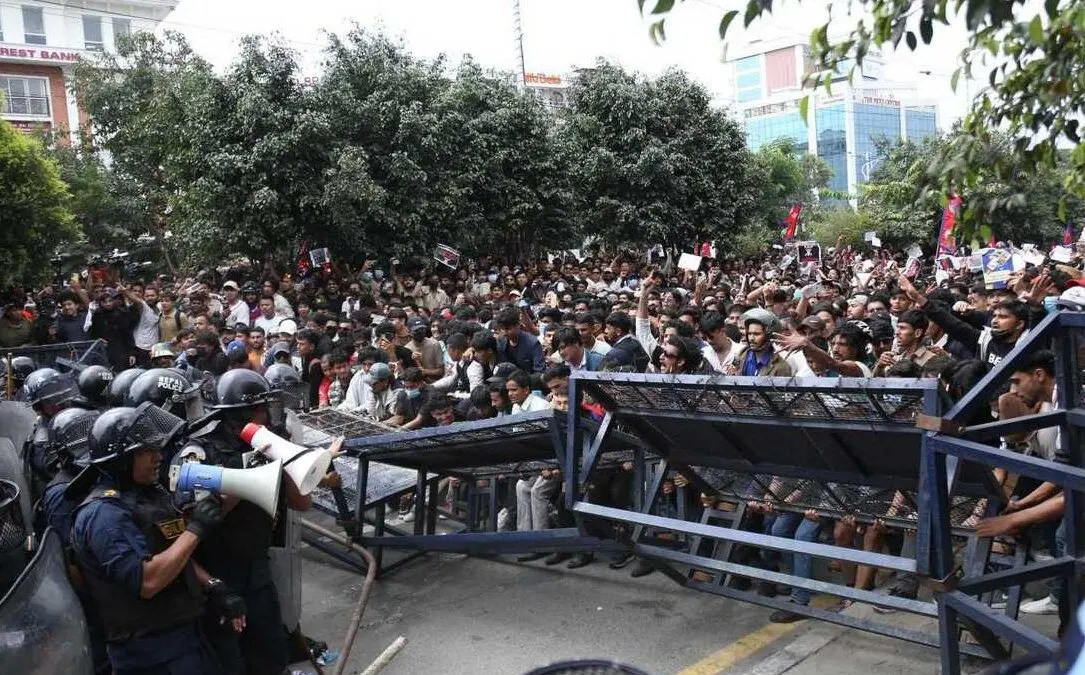
Kathmandu: Nepal witnessed a massive youth-led uprising on Monday as thousands of Gen Z protesters poured onto the streets of Kathmandu, railing against corruption and the government’s sweeping restrictions on social media platforms. The demonstrations, now being referred to as the “Gen Z Revolution,” have quickly grown into one of the most powerful civic movements in recent years.
The protest turned violent after protesters clashed with the security forces, surrounded and entered Parliament in New Baneshwor after jumping barricades. Security forces responded with tear gas and water cannons. Reports said at least 10 people have died in the clashes and several left injured. According to reports, Army has been sent to bring situation under control.
The protests escalated outside the Parliament, where young demonstrators broke through barricades and entered restricted zones, leading to clashes with security forces. In response, authorities-imposed curfew orders around Parliament and other sensitive areas of the capital, as the movement gathered momentum.
The immediate trigger was the government’s decision on September 4 to ban 26 widely used social media platforms, including Facebook, WhatsApp, YouTube, and X, after they failed to register with the Ministry of Communications and Information Technology. Officials defended the move as a regulatory measure, but protesters argue it is a deliberate attempt to curb free speech and silence dissent.
Watch the protest video here:
🚨Breaking news:- Youth brigade’s fierce protest against Nepal government in Kathmandu, youth took to the streets against corruption and social media ban.
This movement of Nepali youth is absolutely justified.💪🔥#socialmediaban#Nepal #kathmandu #protest pic.twitter.com/f9E7mZrlg9
— Aman Verma (@aman9950) September 8, 2025
For the young demonstrators, the ban represents more than just the loss of online platforms—it is seen as part of a larger pattern of political overreach and corruption under Prime Minister KP Sharma Oli’s administration. Chants calling for accountability and transparency echoed across the capital as demonstrators carried placards denouncing both censorship and graft.
Prime Minister Oli, while addressing the growing dissent, maintained that the restrictions were necessary. “This is not about curbing freedom of speech, but about ensuring accountability and discipline in cyberspace,” Oli said, as quoted by India Today.
Despite the government’s assurances, the movement shows no sign of slowing down. Protesters have vowed to continue until their demands for free expression, accountability, and clean governance are addressed, with social media becoming both the battlefield and the symbol of their resistance.