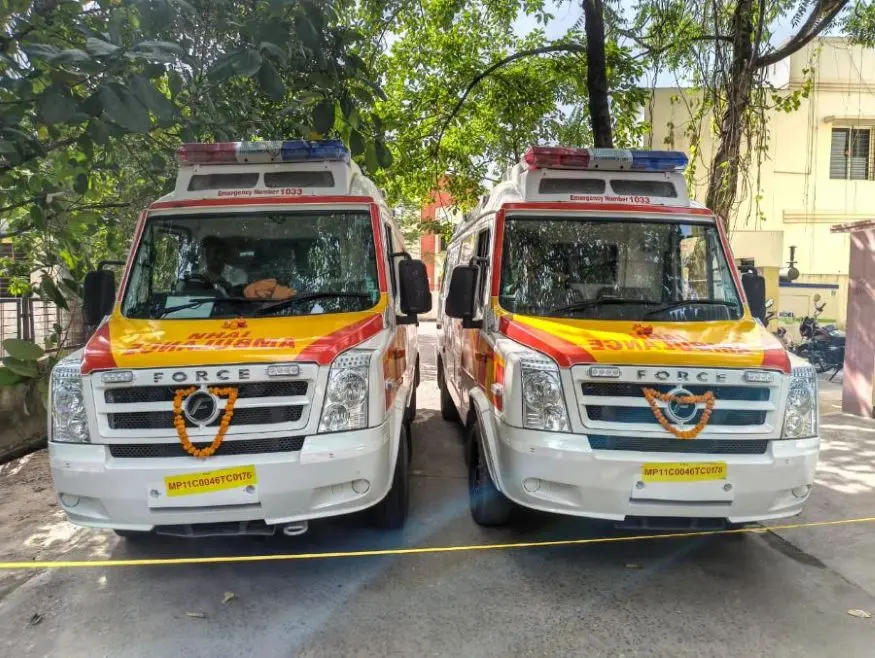
New Delhi: The National Highways Authority of India (NHAI) has set a 10-minute deadline for ambulances deployed on national highways to reach any accident site within a 10-km vicinity.
Failure to meet the timeline could attract a penalty of Rs 10,000 per incident.
Revising its policy guidelines to cut delays in emergency response, NHAI further said that ambulances should bring accident victims to the nearest hospital within one hour from the time of ticket acceptance.
The new norms of the government-owned agency will help manage the dispatch of on-road units, including ambulances, cranes and patrolling vehicles in a more effective way and strengthen the Incident Management System through the use of NHAI Care System,.
“Based on location of incident the ambulance should not take more than 10 minutes for covering any accident within 10-km vicinity,” NHAI said. “For incident locations beyond 10 km, allowed time shall be proportionally increased. The same shall be verified through GPS data/ IMS Care Dashboard.”
Currently, there are around 3,000 ambulances and 1,000 patrolling vehicles and cranes covering roughly 50,000 km of highways under the NHAI.
Any emergency ticket rejection by ambulance will attract a penalty of Rs 10,000. All equipment, medicines and staff should be provided as per agreements of the contract, failing which a penalty of Rs 10,000 will be imposed, NHAI intimated.
“Dedicated Android Mobile Device with loT Sim has been provided to each of the on-road units,” NHAI said.
Helpline number 1033 has been rolled across the National Highway network.
NHAI said delays in accident response time have been flagged by the Supreme Court Committee on Road Safety and also in a CAG performance audit.
“Therefore, all Project Directors (PDs) and Regional Officers (ROs) are directed to ensure strict compliance of the guidelines being issued vide this circular as the same concerns the Public Health and Safety and any laxity in this regard shall not be overlooked,” NHAI said.