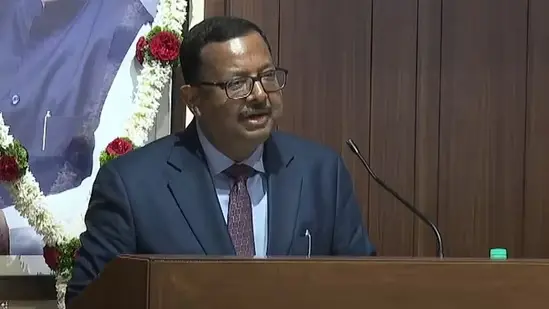
Bhopal: Supreme Court Justice Ujjal Bhuyan has criticised the way courts in India handle petitions filed by citizens facing criminal action over dissent or protest.
Justice Bhuyan, who was addressing students at a lecture in Bhopal’s National Law Institute University (NLIU), said courts must guard constitutional freedoms and warned that public space for dissent in India was shrinking.
Taking the recent example of the arrest and imprisonment of 14 Muslim men for consuming chicken biryani while breaking their Ramzan fast on a boat in the Ganga, Justice Bhuyan questioned the basis of criminal action.
“I am sure consuming chicken biryani is not an offence. There is no law prohibiting consumption of chicken over the Ganga river. They were arrested for that very reason and they had to remain in jail for three months. Can people be arrested and denied bail for 3 months for such an activity, I ask myself! Citizens are watching, people are watching,” Justice Bhuyan said.
In March, police in Varanasi took into custody 14 Muslim youths under BNS sections 298 and 299 for outraging religious feelings, promoting enmity, public nuisance and violating the Water Pollution Control Act.
The complaint alleged that the men were eating chicken biryani and throwing bones and leftovers into the sacred river, which holds deep spiritual significance in Sanatan Dharma.
“It will not be an exaggeration to say that public space for expressing divergent opinion is shrinking in India. Right to express one’s views and right to demonstrate peacefully are fundamental freedoms of citizens. Debate and dissent are the essence of democracy. Unfortunately, even formal activities are criminalised,” Bar and Bench quoted Justice Buyan as saying.
Recalling a July 2025 Bombay High Court order rejecting a plea by the CPI(M) to hold a demonstration at Mumbai’s Azad Maidan against alleged genocide in Gaza, Justice Bhuyan questioned judicial attitudes towards protests over global humanitarian issues.
“I found it very amusing that when in Bombay, Shivaji Park, when a group of people wanted to demonstrate in solidarity with the people of Gaza, permission was not granted by the government. So, they moved a writ in the Bombay High Court… the learned judge said ‘don’t you have any issues in India, why do you have to go that far to agitate’?” he said.