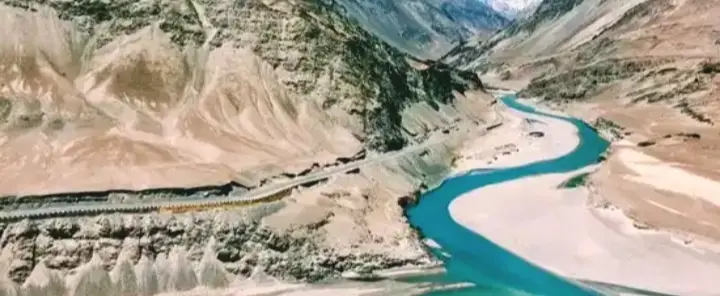
New Delhi: The Indus Water Treaty (IWT) remains in abeyance and India is making every effort to ensure that not a “single drop” of water flows to Pakistan, Union minister of Jal Shakti (Water Resources) C R Patil said on Wednesday.
Union home minister Amit Shah is personally monitoring the matter, under the directives of Prime Minister Narendra Modi, he said.
“It still stands; rather, the treaty has been kept in abeyance. And since Prime Minister Modi took this decision, every effort is being made to ensure not a single drop flows there. Under the Prime Minister’s directives, home minister Amit Shah is also personally monitoring the matter, and we a
re actively working on it,” Patil told news agency ANI while speaking about the Indus Water Treaty.
“I believe the work is proceeding in a time-bound manner, and the flow of Indus water to Pakistan will stop, as I can say. It is certain – not a single drop of water will go in the coming years; I can tell you that much…” he added.
The IWT was put in abeyance by India after the horrific terror attack in Kashmir’s Pahalgam on April 22 last year, which left 26 people dead.
The Treaty sets out a mechanism for water sharing and information exchange between India and Pakistan for the use of the Indus River water and its five tributaries Sutlej, Beas, Ravi, Jhelum, and Chenab. The treaty was brokered by the World Bank, which is also a signatory, and was signed after negotiations for over nine years which followed the first war over Kashmir.
Under the IWT, waters from the western rivers (Chenab, Jhelum and Indus) are allocated to Pakistan, leaving the eastern rivers (Ravi, Beas and Sutlej) to India for unrestricted use. India is allowed to extract water from the western rivers for certain non-consumptive, agricultural, domestic use and hydroelectric power generation.
India is now planning to harness the waters of the Chenab Jhelum and India in a way to stop the flow to Pakistan.