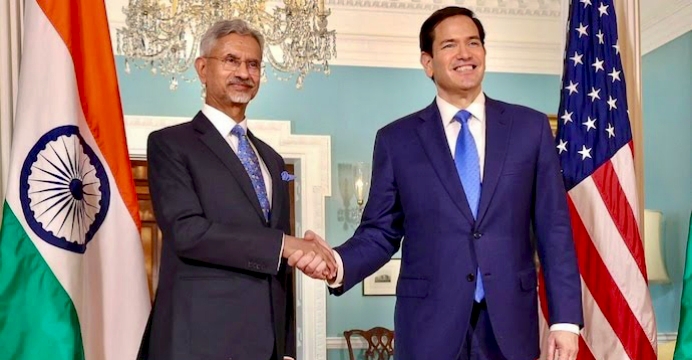
New Delhi: More than Russian oil, India’s refusal to open up its vital agriculture and dairy sectors to US products was behind the imposition of 25% tariff by the Donald Trump administration, experts believe.
There was hint of this in what US secretary of state Marco Rubio said on Thursday in an interview with Fox Radio. India’s purchases of Russian oil are helping to sustain Moscow’s war efforts in Ukraine and it is “most certainly a point of irritation” in New Delhi’s relationship with Washington, although not the only point of irritation, Rubio said.
According to him, the US President is frustrated with the fact that India continues to buy oil from Russia, despite having so many other oil vendors available, and helps to fund Russia’s war effort against Ukraine.
“India has huge energy needs and that includes the ability to buy oil and coal and gas and things that it needs to power its economy like every country does, and it buys it from Russia, because Russian oil is sanctioned and cheap. In many cases, they’re selling it under the global price because of the sanctions,” Rubio said.
“Unfortunately, that is helping to sustain the Russian war effort. So it is most certainly a point of irritation in our relationship with India – not the only point of irritation. We also have many other points of cooperation with them,” the US secretary of state added.
Experts believe that Russian oil is just an excuse. One of the biggest points of contradiction that has stopped India and the US from signing a trade deal is India’s firm resistance to opening up its agriculture and dairy sectors, they say. The US has been pushing for greater access to India’s agricultural market, particularly for GM crops, dairy, and products like corn, soybeans, apples, almonds, and ethanol.
While the US has been insisting on tariff reductions in these sensitive sectors, New Delhi argues that allowing cheaper, subsidised US farm goods into the country would harm the income of millions of small farmers.
India has told the US that reducing tariffs on dairy, rice, wheat, and genetically modified (GM) crops like corn and soybeans is not possible right now. According to officials, such a step could hurt over 700 million rural people, including around 80 million small dairy farmers.
The US is also pushing for better access to the Indian market across a wide range of products other than agricultural and dairy products. These include autos, medical devices, pharmaceuticals and even alcoholic drinks. It also wants India to cut down its non-tariff barriers, simplify customs rules, and relax laws on data storage, patents and digital trade.