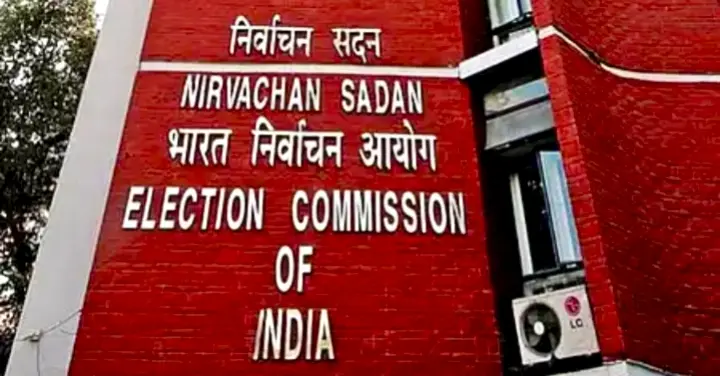
New Delhi: There is nothing arbitrary in the way the Special Intensive Review (SIR) is being conducted, the Election Commission of India (ECI) has told the Supreme Court.
“There may be errors here and there, but the exercise is bona fide,” senior lawyer Rakesh Dwivedi, appearing for the ECI, informed the Court, as reported by The New Indian Express.
The Court was hearing a batch of pleas challenging the ECI’s decision to conduct th SIR exercise to revise and update electoral rolls in several states, including Bihar and West Bengal. According to Dwivedi, the CAA was amended after the SIR was conducted in 2003, and a person had to prove that both of the parents were born in India. This was done as cross-border migration had increased.
“The Amendment Act of 2003 was passed when Atal Bihari Vajpayee was the PM. There was complete support on both sides, no opposition…. It shows that across the board this amendment was desirable,” he said.
He defended
the entire exercise, stating that no individual directly affected by the SIR exercise of electoral rolls has come to court. “You see who are the petitioners?
“Persons who come to court are leaders of political parties, private individuals and NGOs. The petitioners are only raising a hue and cry, saying they represent unnamed individuals,” Dwivedi said.
When questioned by the petitioners on whether the due process was followed in the SIR, he said: “Now even Donald Trump can go and suddenly lift the President of Venezuela and now wants Greenland – where is due process in that?”
“Now the US is also not applying due process,” he said on a lighter note.
“This expression ‘due process’ has been used sometimes by the courts without realising that it is borrowing from the US courts,” the Court then noted.
Dwivedi, quoted the SC’s earlier observations, and said: “Even Mylords have said here that the courts cannot sit on wisdom of the policy makers.”
Questioning the manner in which the pleas were filed in the top court in the case challenging the SIR process, the ECI counsel pointed out that the writ petitions were filed six days after the SIR order.
“Articles were published in the newspapers, and then writ petitions followed. It has become a fashion to attack the ECI,” Dwivedi said, adding that statistics could be tweaked to fit narratives.