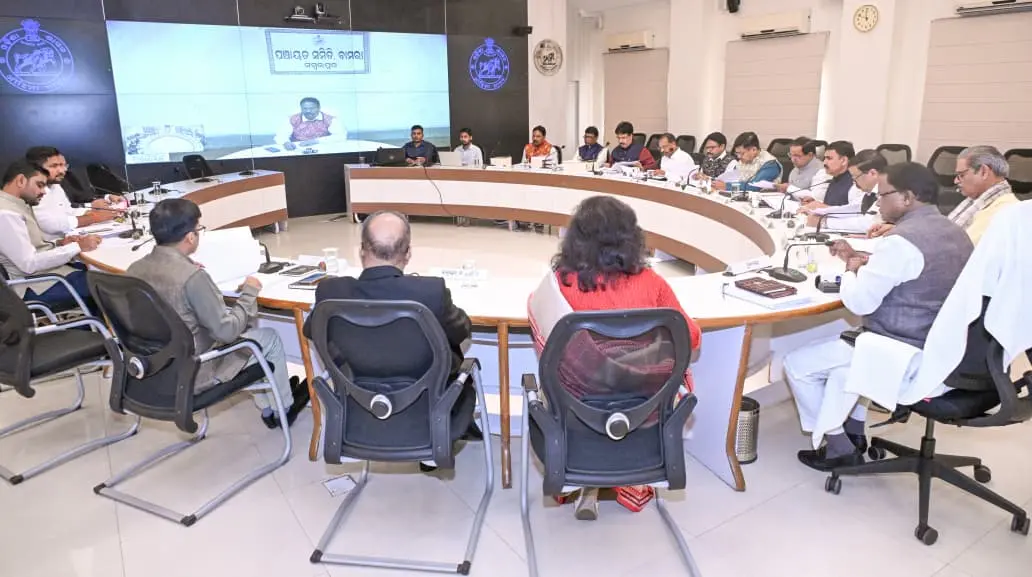
Bhubaneswar: In a significant step to strengthen irrigation infrastructure across the state, the Odisha Cabinet on Saturday approved the Diversion Weir Improvement Scheme.
The Cabinet, which met under the chairmanship of Chief Minister Mohan Charan Majhi, cleared allocation of Rs 362 crore from the state’s own funds for its implementation over the next three financial years, from 2025-26 to 2027-28.
Chief Secretary Anu Garg Told reporters after the Cabinet meeting that the scheme aims to restore and upgrade ageing diversion weirs under the Minor Irrigation Organisation, many of which have outlived their design life and suffered structural deterioration over decades.
Diversion weirs are critical hydraulic structures built across rivers and streams to raise water levels and enable gravity-based irrigation or facilitate water flow through Underground Pipe Gravity Lines (UPGL). Odisha currently has around 1,133 divers
ion weirs and two barrages, of which nearly 70 per cent are more than 30 years old. Officials noted that the absence of a comprehensive repair plan in the past has led to damage, reduced water retention capacity, and compromised irrigation efficiency.
To address these long-pending issues in a systematic manner, the newly approved scheme will undertake a range of structural repair and upgradation measures. These include repair and reconstruction of main diversion weir and anicut structures as per original designs, along with strengthening of side embankments and afflux bunds to ensure structural stability and safety.
Additionally, the scheme will cover several allied works to enhance operational efficiency and maintenance, such as:
– Construction of 200–300-metre-long concrete lining from the head of the main canal to ensure smooth and regulated water supply,
– Repair and reconnection of shutters in diversion weirs and barrages,
– Desilting of ponding areas to improve water storage capacity, and
– Construction of approach roads to project sites for better access, protection, and routine maintenance.
Officials said the scheme is expected to significantly improve irrigation reliability, optimise water use, and support agricultural productivity, particularly in regions dependent on minor irrigation systems.