Bhubaneswar: Across Odisha and among Odia communities worldwide, Pakhala Dibasa is observed with great enthusiasm on March 20.
The day is dedicated to Pakhala — Odisha’s iconic fermented rice dish — a simple, cooling, probiotic-rich meal that has been a summer staple for generations.
Joining the celebration, Chief Minister Mohan Charan Majhi described Pakhal as ‘the aroma of our soil, the pride of our traditions, and an integral part of Odia lifestyle’ in a post on X. He called upon Odias, both in Odisha and around the world, to preserve the glory of this traditional food while strengthening their identity on the global stage.
Union Minister Dharmendra Pradhan warmly praised Pakhala as an integral and cherished element of Odia life, deeply intertwined with the state’s agricultural roots and rich cultural traditions. He described it as a powerful
cqeeo r-1ttztb7 r-qvutc0 r-poiln3 r-b88u0q r-1x3r274″>symbol of pride, identity, and Odisha’s enduring heritage.
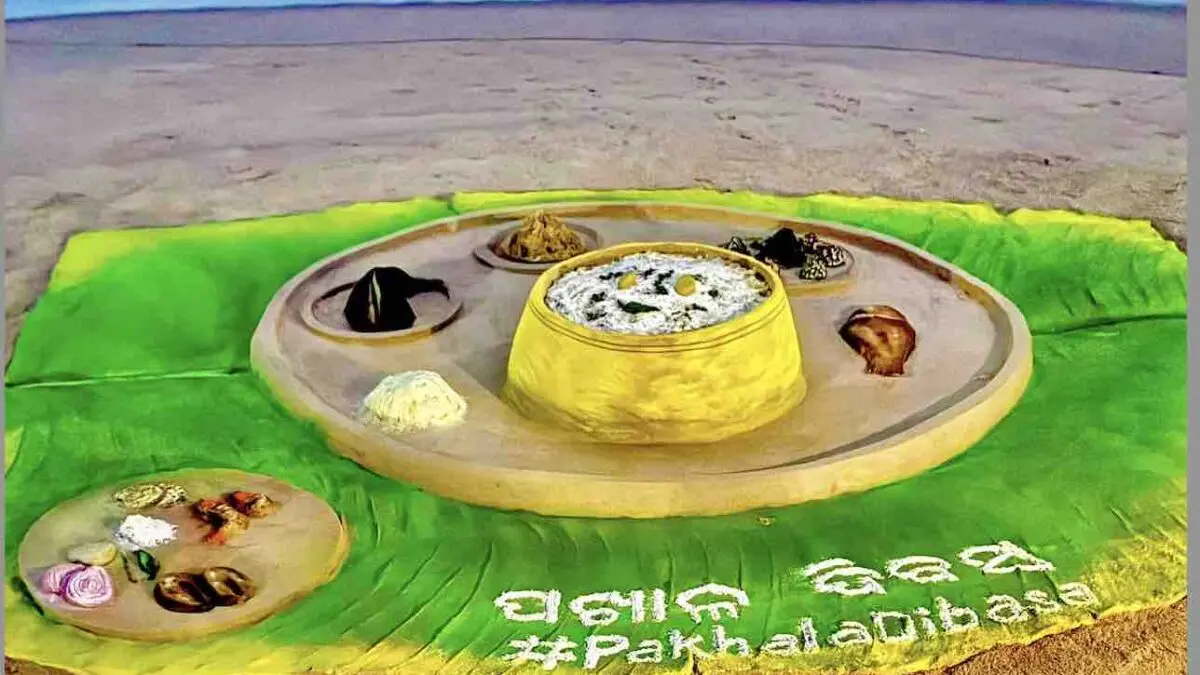
Acclaimed sand artist Sudarsan Pattnaik also created a sculpture on Puri seas beach to celebrate the day. “A day dedicated to the most liked Odia delicacy, Pakhala is indeed a great feeling. Here is my sand art at Puri beach in Odisha,” he wrote.
Since 2015, March 20 has been dedicated to honouring the cherished summer dish of fermented rice, a culinary treasure that not only cools the body during the scorching heat but also warms the soul with comfort. As content creator Manas Muduli rightly puts: “…simple, cooling, and deeply rooted in tradition. From farmers to food lovers, Pakhala is more than a dish… it’s an emotion.”
No wonder, this celebration aligns perfectly with the International Day of Happiness, and follows just two days after World Sleep Day. Pakhala embodies both joy and tranquility for Odias around the world. And, people who love it, also swear by its sleep-inducing quality. On a sultry afternoon, a bowl of Pakhala followed by an hour of nap is what Odias cherish.
Pakhala is prepared by soaking cooked rice in water, often mixed with yogurt, curd, spices, green chillies, and sometimes lemon or curd. Its fermentation process makes it rich in probiotics, easy to digest, and naturally cooling — ideal for Odisha’s hot summer months. The dish symbolises simplicity, sustainability, and Odia identity: affordable for the rich and poor alike, it has roots in temple offerings to Lord Jagannath and has spread to neighbouring states like Bengal and Assam.