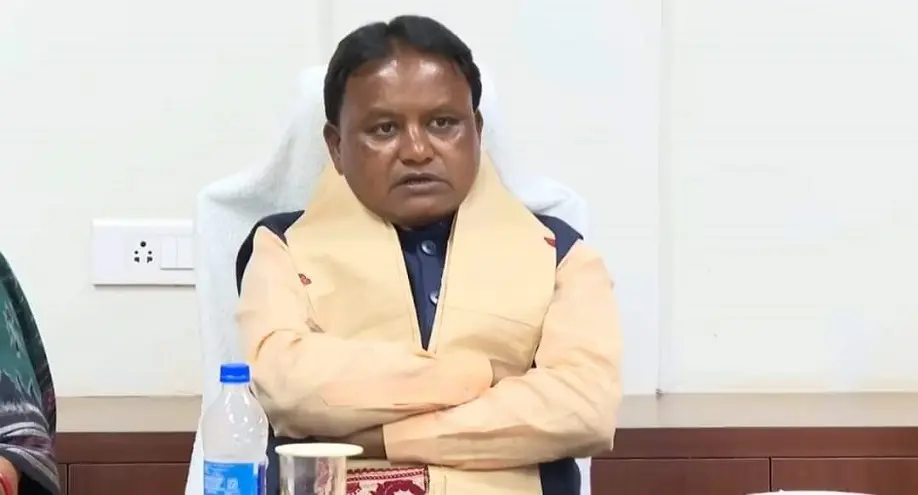
Bhubaneswar: Odisha Chief Minister Mohan Charan Majhi has strongly defended the Special Intensive Revision (SIR) of electoral rolls, describing the Election Commission of India’s (ECI) exercise as transparent and technology-driven exercise.
Majhi accused Opposition parties, particularly the Congress, of deliberately creating a negative atmosphere and attempting to defame a constitutional body for political gains.
In a detailed statement, Majhi said the SIR, undertaken after nearly 25 years, has been implemented efficiently across the country using digital technology to ensure clean voter lists.
“The Opposition, especially Congress, is attempting to tarnish the reputation of the Election Commission, a constitutional institution, for partisan interests.. That is highly condemnable,” the CM said.
On claims that 13 crore voters had been deleted across the country, Majhi clarified that 2.8 crore people were deceased, 3 crore were absent, 6.3 crore had migrated and 1 crore names were registered at multiple places.
He noted that booth-level agents of all parties have been present during the preparation and verification of lists, as mandated under the constitutional framework. “These agents have the right to raise claims and objections, leaving little scope for errors in the rolls,” he pointed out.
The Chief Minister rejected allegations of changes to Form 6, saying that no modification was made to the form itself. “A declaration form was added to the same document for the convenience of voters — a step that has been upheld by the Supreme Court,” Majhi stated.
On accusations that the voter list database has been centralised, Majhi emphasised that state voter lists continue to be managed by the Chief Electoral Officer (CEO) and Electoral Registration Officers (EROs). “The system remains fully decentralised, with no change in the legal or procedural powers of EROs across states. Only the process has been digitised through the ECI-NET and ERO-NET modules,” Majhi remarked.
He stressed that new voters have not been inconvenienced. “Since June 24, 2025, 2.37 crore new voters, referred to as Gen-Z, have been enrolled, which equates to more than 50,000 additions daily. The total number of Gen-Z voters (aged 18-28) now stands at 17.38 crore, and the process of adding names to the electoral roll remains available throughout the year,” Majhi said.
On the charge that Chief Election Commissioner (CEC) Gyanesh Kumar took unilateral decisions while ignoring the other two commissioners, Majhi said it was “completely false and politically motivated” allegation.
“All decisions of the Commission are taken by consensus, as clarified by the Election Commission itself. Discussions, questions, and resolutions are a natural and healthy part of any democratic process.”
He accused the Congress of creating a false narrative due to frustration and desperation after failing to find genuine issues.
Majhi pointed to Kerala’s Congress leader and state Home minister Ramesh Chennithala welcoming the SIR. Chennithala had acknowledged that previous governments had many fake voters on the rolls and that the SIR helped remove them, contributing to the Congress’ electoral success there.
“The Congress policy is: wherever they win, everything is fine; wherever they lose, democracy is in danger,” Majhi remarked, adding that the party’s attempts to fish in troubled waters would fail.
On the 2023 law that removed the Chief Justice of India from the Election Commission appointment process, Majhi said earlier appointments were made unilaterally by the Central government.
“The new law includes the Prime Minister, a Union Minister and the Leader of the Opposition, making the process more democratic and impartial than before,” the Odisha CM observed. He advised the Congress to examine its own history before raising such allegations, invoking an Odia proverb to underscore the irony.