Bhubaneswar: The Odisha government has announced a series of initiatives to address decades-old grievances over land rights in Malkangiri district, which have been a bone of contention between indigenous tribal communities and Bengali settlers.
These measures followed the violent clashes last month, triggered by the murder of a tribal woman.
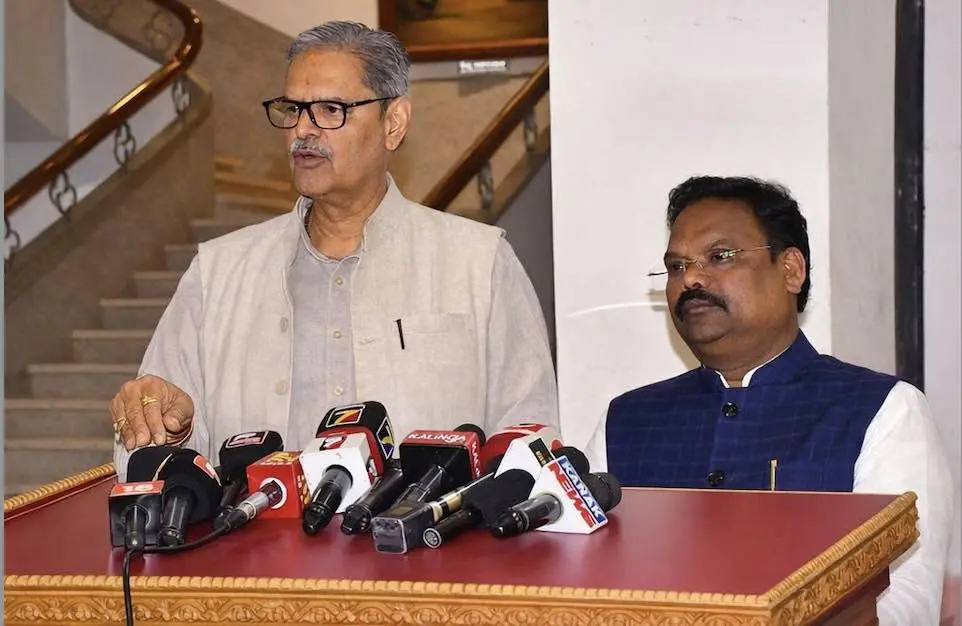
Deputy Chief Minister KV Singh Deo and MSME minister Gokulananda Mallik announced the comprehensive relief and development package, which was finalised at a high-level meeting chaired by Chief Minister Mohan Charan Majhi on Thursday, to ensure justice, rehabilitation and long-term socio-economic stability for the communities in the region.
The Package
The state government has prioritised review of 100 pending land cases under the Odisha Scheduled Areas Transfer of Immovable Property (by Scheduled Tribes) Regulation, 1956 (commonly known as Regulation 2 of 1956). This law prohibits the transfer of tribal land to non-tribal
s in scheduled areas.
The Malkangiri district collector has been directed to examine these cases fortnightly on a priority basis and report progress to higher authorities.
Additionally, permanent land titles (pattas) will be expedited under the Forest Rights Act (FRA) and the Odisha Government Land Settlement Act, 1962.
Special focus will be on rehabilitating families displaced by Machhkund hydroelectric project in the late 1940s and 1950s, who remain without proper land rights despite decades of grievances. The Revenue and Disaster Management Department will coordinate with the Water Resources Department for a long-term solution.
Additional Chief Secretary, Revenue & Disaster Management, have been asked to conduct quarterly reviews of revenue-related matters in the district and submit reports to the government.
The other decisions include irrigation to upland agricultural lands of tribal and other communities located near reservoirs/water bodies to boost productivity in remote areas, livelihood support by facilitating tribal access to schemes such as Chief Minister’s Agriculture Development Scheme, Prime Minister’s Employment Generation Programme (PMEGP), and Prime Minister Formalisation of Micro Food Processing Enterprises (PMFME) and filling up vacant primary school teacher posts for Koya, Didayi, and Bonda tribal languages by School & Mass Education Department.