Bhubaneswar: In a decisive move to protect patients from out-of-pocket medical expenses, the Odisha government has issued a strict warning to all private and public hospitals empanelled under the flagship Ayushman Bharat Pradhan Mantri Jan Arogya Yojana – Gopabandhu Jan Arogya Yojana (AB-PMJAY-GJAY).
The state authorities have made it clear that healthcare institutions are strictly prohibited from billing cardholders for any diagnostic tests, medications, or consultations required before or after their hospital stay, as these services are fully covered under the state-sponsored universal health insurance package.
State Health Assurance Society Chief Executive Officer, Dr Brundha D, communicated this directive through an official letter sent directly to the management of all empanelled hospitals.
Emphasising that institutions must strictly align with the guidelines of the joint healthcare programme, she stressed that the collection of secondary fees for services already built into the package structure constitutes a severe compliance violation. “It has come to our notice that several empanelled hospitals are charging money from beneficiaries towards pre-hospitalisation and post-hospitalisation diagnostics. As per the scheme guidelines, expenditure incurred by beneficiary for consultation, diagnostics and medications up to 3 days before getting admitted in the hospital is included in the package cost,” the June 1 letter said.
This pre-hospitalisation coverage, however, remains applicable only if the patient receives these initial services at the exact same healthcare facility where their primary in-patient treatment is initiated. “This is applicable only to the expenses made in same hospital, where treatment under AB-PMJAY-GJAY is initiated.”
The dir
ective further clarifies that hospitals bear the responsibility of keeping the follow-up visits entirely free of cost within the designated fortnight window. “The expenses incurred by the beneficiary from the date of discharge up to 15 days for consultation, medicines and diagnostics and post operative care is also covered in the package cost. Hospitals must procure required medications and provide to the beneficiary and if diagnostics evaluation and follow up visits are needed within 15 days post discharge. It should be done free of cost by the hospitals. The beneficiary should not be charged for such pre and post hospital expenses.”
The administration also tackled the issue of medical complications, clarifying that if a patient suffers from post-operative issues or requires readmission related to the original procedure, the entire cost of the follow-up treatment must be absorbed within the initial package pricing. “In case of surgery. post operative complications and
readmission linked to the treatment is to be covered under the earlier package cost.”
The CEO warned the hospitals against exploiting vulnerable patients by demanding hidden payments. “Therefore, all empanelled hospitals are hereby requested to strictly adhere to the scheme guidelines and refrain from charging money from beneficiaries for any service covered in the package cost. Any deviation from these guidelines will be taken seriously.”
This rule is designed to safeguard the 1.03 crore eligible families in Odisha, who receive up to Rs 5 lakh per family annually in rural areas, Rs 6 lakh in urban regions, and an additional Rs 5 lakh for women members, from falling back into financial distress due to sudden medical crises.
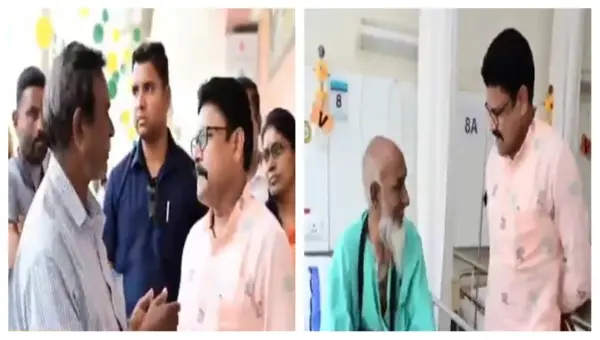
To ensure ground-level compliance with these rules, Health and Family Welfare Minister Mukesh Mahaling carried out unannounced inspection visits to two prominent private hospitals operating in Bhubaneswar.
During his surprise reviews, the minister inspected the patient care infrastructure and evaluated how effectively the cashless delivery system was being managed. He directed the hospital administrators to set up highly visible help desks specifically dedicated to the AB-PMJAY-GJAY scheme.
Mahaling emphasised that hospital staff must guide beneficiaries smoothly through the paperwork and explicitly stated that every patient walking through the doors must be treated with the utmost dignity and care.