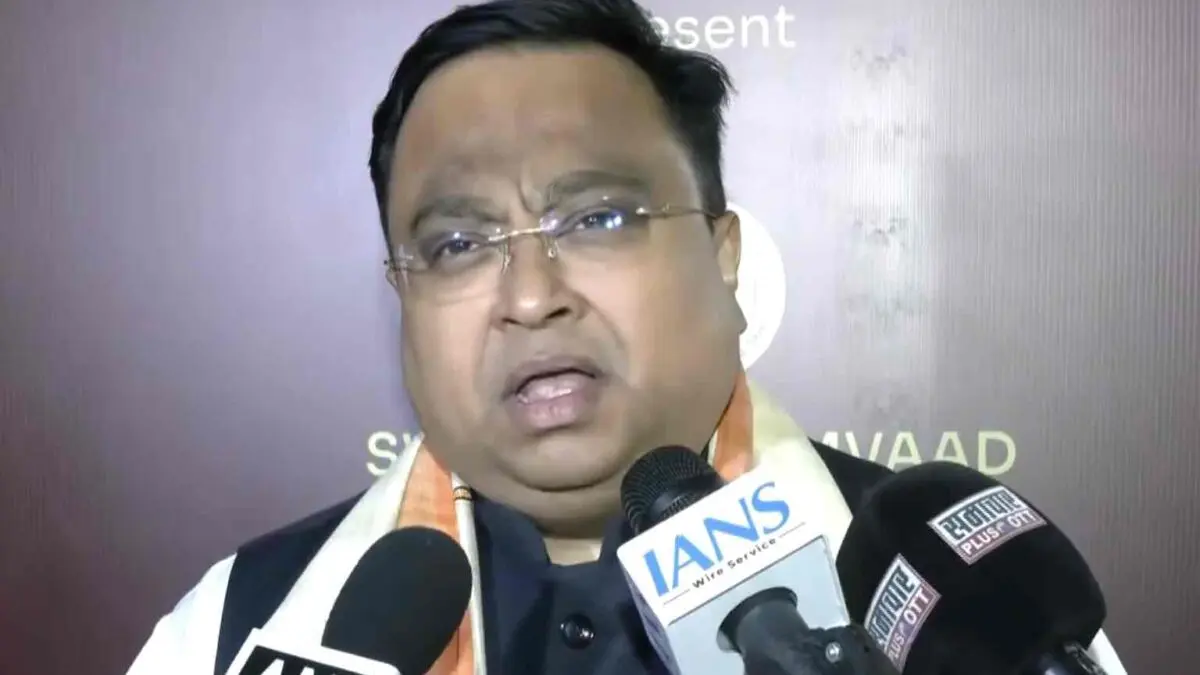
Bhubaneswar: Biju Janata Dal (BJD) MP Sasmit Patra on Monday sought detailed clarifications on the proposed 50:50 joint venture between National Aluminium Company Limited and NLC India Limited for a 1,080 MW captive thermal power project at Angul in Odisha.
In the letter to NALCO Chairman-cum-Managing Director Brijendra Pratap Singh, Patra, who is also a member of Parliamentary Standing Committee on Coal, Mines and Steel, questioned the commercial rationale for the arrangement, noting that public representations have raised doubts about its viability. He pointed out that NALCO already operates a 1,200 MW captive power plant, has established infrastructure and coal linkages, and produced 4 million tonnes of coal from its Utkal-D and Utkal-E mines in FY 2025-26.
Coupled with the company’s strong recent financial performance, he argued that NALCO appears capable of executing the project independently rather than surrendering 50 per cent equity in a facility intended solely for its own operations.
The joint venture, agreed upon earlier this year, aims to develop a 4×270 MW plant to supply power for NALCO’s planned 0.5 MTPA aluminium smelter expansion at Angul, targeted for commissioning around 2030-31. Under the structure, the JV company would sell 100 per cent of the generated electricity to NALCO under a 25-year power purchase agreement while sourcing coal through a long-term arrangement with NLCIL.
The BJD MP sought a point-wise written response addressing six critical aspects of the deal. First, he asked whether NALCO evaluated a wholly owned and operated model against the joint venture, and what comparative techno-economic assessment proved that giving up half the equity would yield superior financial and operational outcomes. Second, noting that reported project cost estimates range between ₹12,000 crore and ₹17,000 crore, he sought clarity on the approved capital outlay alongside comparative financing costs, projected power tariffs, return on investment (ROI), and lifetime financial benefits under both execution models.
On the front of fuel security, he questioned why a separate long-term coal supply agreement with NLCIL is commercially preferable when NALCO already holds the Utkal-D and Utkal-E mines, while also requesting an update on the operational status of NLCIL’s Machhakata coal block and comparative delivered coal costs.
Regarding asset valuation and ownership, he asked what specific contributions from NLCIL justify equal equity, and how NALCO’s pre-existing infrastructure, including land, water supply, railway connectivity, and ash-handling facilities, will be valued, utilised, and commercially compensated.
Highlighting long-term financial exposure, Patra questioned the rationale behind NALCO committing to purchase 100% of the electricity generated by the plant for 25 years while holding only a 50% equity stake, asking for full disclosure of tariff-setting, profit-sharing, governance, and risk-allocation mechanisms.
Finally, pointing to historical delays in NALCO’s expansion projects, he asked for the current status of company incorporation, regulatory approvals, and financing, along with safeguards to ensure the power plant is commissioned in sync with NALCO’s planned smelter expansion by 2030–31.
Emphasising that a public sector investment of this scale must be justified by clear economic advantages rather than the convenience of an inter-PSU partnership, the Rajya Sabha member stated that the decisive test is whether NALCO and its shareholders would be better off under the joint venture than through independent execution. He has requested an early written reply supported by comparative feasibility reports, financial evaluations and Board-approved rationales to address the concerns and safeguard NALCO’s strategic assets as well as Odisha’s long-term economic interests.
The development comes three days after Singh ruled out any plans for privatisation or relocating the Angul smelter to Andhra Pradesh.
Also Read: No Privatisation: NALCO Aims To Plough Back Profits Into Expansion; Launch New Green Energy Vertical