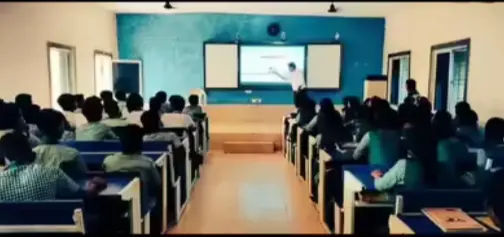
Bhubaneswar: The Odisha government has announced a landmark initiative to establish artificial intelligence (AI) powered classrooms in more than 5,000 schools across the state.
This move took a concrete shape at a high-level meeting chaired by Chief Minister Mohan Charan Majhi, and attended by Chief Secretary Anu Garg and top officials. A memorandum of understanding (MoU) is expected to be signed with an Indian Artificial Intelligence company.
“Odisha is the first state in the country to have an AI policy in 2025. By having AI powered schools, our students will be highly skilled in technology. We are aiming to revolutionise learning and bridge educational gaps for students in rural and disadvantaged regions,” CM Majhi said after the recent meeting.
The project, spearheaded by the School and Mass Education (SME) department through the Odisha School Education Programme Authority (OSEPA), will cover 5,370 government and government-aided secondary and higher secondary schools. Officials said the move is designed to help students grasp concepts faster and more effectively by using engaging digital content and AI-driven tools.
Under the plan, AI-powered virtual classrooms will be integrated
with 4 central broadcasting studios in Bhubaneswar and Cuttack, along with 8 regional studios located in zonal headquarters across the state. These studios will deliver interactive lessons and digital content in both Odia and English for classes VI to XII. Students will be able to access lectures from state-level experts virtually, while teachers can conduct live classes using desktops, laptops or smartphones.
A key component of the initiative is the digital assessment platform, which will monitor real-time student participation and attention levels. This system will provide teachers with insights into academic progress, enabling more personalized and efficient instruction. Beyond classroom learning, the platform will also be used for teacher training, extracurricular courses, and skill development programs, expanding its impact across the education ecosystem.
Connectivity remains a major challenge in rural Odisha, but the government has planned solutions to ensure inclusivity. Around 50 percent of the schools will be connected through BharatNet or Fibernet, while the remaining institutions will rely on satellite connectivity to guarantee reliable access even in remote areas. To safeguard privacy and ensure smooth functioning, Edge AI technology will process data locally on devices, reducing risks and allowing offline use.
The project will comply with the Digital Personal Data Protection Act, 2023. To protect the identities of student most of whom are minors, the application will generate avatars instead of using photographs, ensuring that no personal images appear in reports or dashboards.