Bhubaneswar: The number of Biju Janata Dal (BJD) MLAs reportedly defying their party whip during Monday’s Rajya Sabha elections for four seats from Odisha has surpassed instances of cross-voting from the Congress, casting fresh doubts on the unity of Opposition in the state.
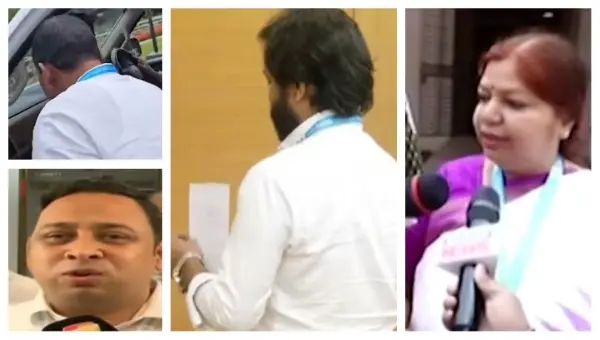
According to sources, BJD MLAs Subasini Jena, Devi Ranjan Tripathy, Souvic Biswal and Chakramani Kanhar have cross voted in the high-stakes polls.
There were indications that Choudwar-Cuttack MLA Souvic may not toe the party line after his father and former MLA Pravat Ranjan Biswal was expelled from the BJD last month for openly criticising the party leadership over the nomination of Santrupt Misra, political secretary to BJD president Naveen Patnaik, for one of the Rajya Sabha seats from Odisha.
“I voted for the one who has the blessings of Biju Babu…,” Souvic said, indicating that his vote went for BJP-backed Independent candidate Dilip Ray, who had exhorted the former CM while filing his nominations.
The Choudwar-Cuttack MLA further stated that he took revenge for the humiliation his father had suffered in the party. “He made several sacrifices for the BJD in the last 29 years, and was slighted by those who indulged in corrupt practices,” he added.
Similarly, Baliguda MLA Kanhar along with Jayadev MLA Naba Kishore Mallick stayed away from three key party briefings ahead of voting and was later issued a show-cause notice, which directed him to report at Naveen Niwas by 9 pm on Sunday to explain his absence. He hurried past reporters, declining to comment on his vote.
There was speculation that Basta MLA Subasini could defy party lines and cross-vote, after her husband, ex-Balasore MP Rabindra Kumar Jena, quit the BJD and switched to the BJP just one day later. She, however, told the media that she has stuck to the party’s decision.
Banki MLA Tripathy is the son of former MLA Pravat Tripathy, who was initially suspended from the BJD in 201
4 after being indicted in AT chit-fund scam and later expelled for anti-party activities. He admitted to conscience voting. “I stand for the non-Congress voices. My vote will help make Odisha stronger in the Delhi corridors of power in the coming days. I hope that my vote will become the voice of the party workers and reach the leadership,” he said, while raising questions over the ‘unethical alliance’ between BJD and Congress.
Suspended BJD MLA Sanatan Mahakud also launched a sharp criticism of the party shortly after casting his vote. “I have voted for the candidate I believe will genuinely serve the interests of our state,” he told the media.
The BJD has issued a whip to the two suspended MLAs, Sanatan Mahakud and Arabinda Mohapatra, directing them to vote in favour of the party’s candidates. “I have not received any communication or letter from the BJD. There is no provision in the rules to issue a party whip to a suspended member. Moreover, no one from the party contacted me to vote in any specific manner,” Mahakud added.
According to sources, five BJD MLAs and three Congress MLAs have cross-voted for Ray.
Notably, BJD president Naveen Patnaik had earlier accused the BJP of resorting to horse-trading to ensure the victory of its three candidates in the polls. Besides state unit president Manmohan Samal, and sitting MP Sujeet Kumar, the saffron party is supporting former Union Minister Ray.
In the 147-member Assembly, the BJP holds a commanding position with 82 votes (79 MLAs plus three supporting independents) and is poised to comfortably claim two seats. The BJD, with its 48 MLAs, can comfortably secure victory for its primary candidate Santrupt Misra through at least 30 first-preference votes. The outcome for the fourth of four seats hangs in the balance and has turned into a major prestige showdown between the opposition’s joint candidate, Dr Datteswar Hota, and the BJP-backed independent, Dilip Ray. Hota’s chances depended on securing the backing of the 14 Congress MLAs, the lone CPI(M) legislator, and the remaining BJD MLAs.
If none of the candidates get the required first-preference votes amid cross-voting, the outcome could well hinge on second preferences.