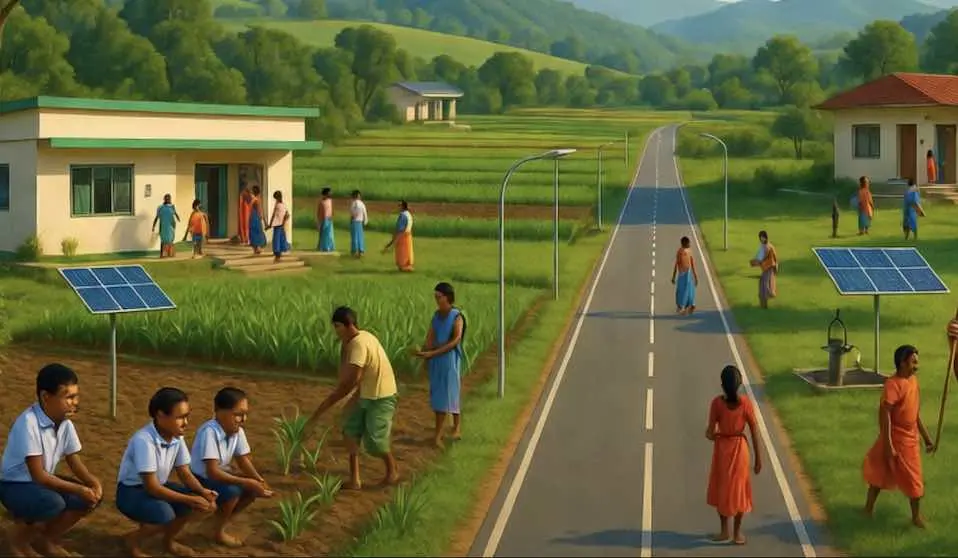
Bhubaneswar: The Odisha government has instructed district collectors of 10 districts to expedite implementation of ‘Gramodaya’ scheme, aiming for comprehensive development, timely delivery of public services, and building greater trust between local communities and the administration in formerly Maoist-influenced areas.
Revenue and Disaster Management Department Additional Chief Secretary Arabinda Kumar Padhee has written to the collectors of Bargarh, Balangir (Bolangir), Kalahandi, Koraput, Malkangiri, Nabarangpur, Nuapada, Rayagada, Kandhamal, and Boudh (Boud), directing focused action on the initiative.
It followed a state-level review meeting chaired by Chief Secretary Anu Garg on March 19.
Key Directives for Speedy Implementation
>> Identify landless and homeless families in 484d villages in 39 blocks by May 15 and provide them homestead plots and land titles (pattas) under the Basundhara Yojana
>> Issue essential certificates — such as resident, income, caste, and legal heir certificates — on a priority basis to eligible applicants in these areas
via the e-District portal.
>> Ensure timely delivery of all government services and welfare schemes.
>> Conduct periodic review meetings to monitor progress and maintain proper data records.
>> Expedite recruitment to fill vacant posts in the Revenue Department to strengthen service delivery.
>> Document and publicise success stories, photographs, and videos for wider dissemination.
Collectors have been invited to submit constructive suggestions to further improve implementation.
Background and Scope of Gramodaya
Launched in October 2024 under Chief Minister Mohan Charan Majhi, the ‘Gramodaya’ initiative seeks to saturate government welfare schemes and basic amenities in Maoist-affected regions through a convergent approach across departments.
The programme emphasises holistic development, including infrastructure like roads, healthcare, water supply, electricity, schools, telecommunications, banking, community centres, and recreational facilities, alongside individual and household-level benefits from over 40 public schemes.
Multi-tier monitoring committees have been set up: a state-level committee chaired by the Chief Secretary, district-level under Collectors, block-level under BDOs, and Gram Panchayat-level committees for oversight.
The initiative also includes recent components like distributing sports kits worth Rs 50,000 each to around 485 villages to engage youth, promote mainstreaming, and foster peace and social harmony.