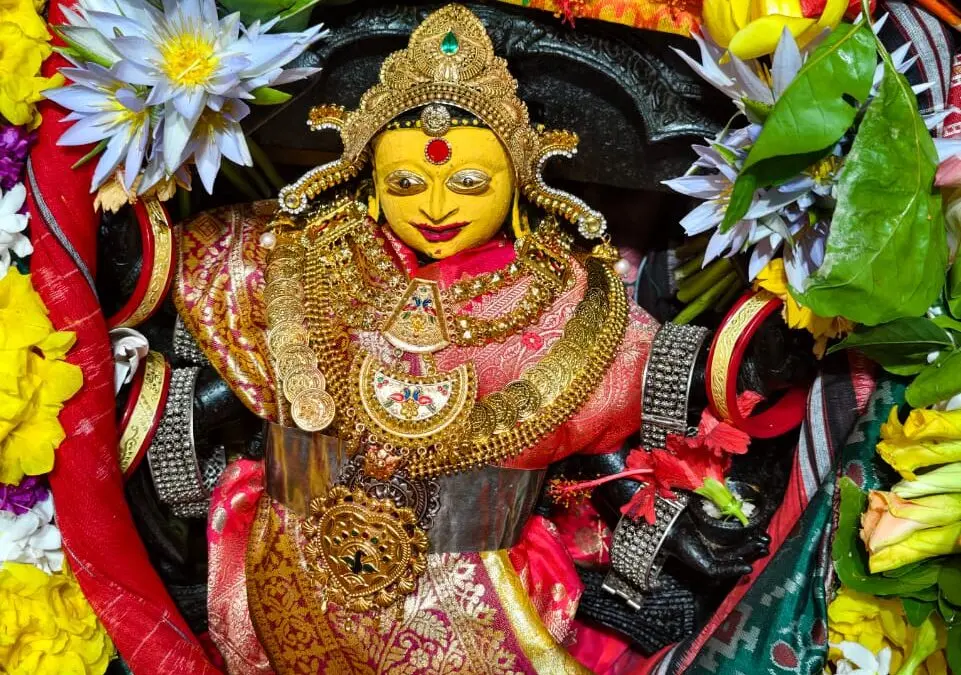
Bhubaneswar: A revered shrine in Khurda district preserves Odisha’s distinctive traditions of Shakti worship, where fierce divinity, faith and the unusual offering of roasted fish come together in a centuries-old spiritual legacy. Her name evokes her fierce aspect, yet devotees approach her with the belief that the Mother who destroys evil also shields her children from adversity. The annual Dussehra celebrations are an important expression of this heritage.
Located near Bhusandpur in Odisha’s Khurda district, around 55–60 km from Bhubaneswar, Maa Ugratara Temple is among the region’s distinctive centres of Shakti worship. Surrounded by verdant hills and the wider landscape of coastal Odisha, the shrine draws devotees who seek the blessings of Maa Ugratara, revered as a fierce yet benevolent manifestation of the Divine Mother. The temple is also associated with the historic fort of Mulajhargarh, of which the Goddess is traditionally regarded as the presiding and protecting deity. Though the fort has faded into history, faith in the Goddess continues to endure.
The Divine Mother: Fierce in Form, Compassionate in Blessings
Maa Ugratara embodies the protective and formidable power of Shakti. The temple’s traditional iconography describes the Goddess as four-armed, holding powerful weapons that symbolise divine strength. Her worship reflects a profound aspect of Odisha’s Shakta heritage, in which the Goddess is revered not merely as a benevolent mother but also as the supreme force that protects her devotees and restores balance.
The image of the tiger-riding Mother reinforces this symbolism of courage, authority and protection. For devotees, Maa Ugratara’s divine presence is a source of reassurance—a reminder that the power of the Mother stands guard over those who surrender themselves to her grace.
Macha Bhoga: A Distinctive Tradition of Devotion
One of the temple’s most remarkable traditions is its offering of macha bhoga, or fish as an offering to the Goddess. Unlike the predominantly vegetarian offerings associated with many Hindu shrines, Maa Ugratara’s ritual traditions preserve a distinctive expression of Odisha’s Shakta practices, where regional food customs form an integral part of worship.
The Goddess is traditionally offered poda machha (roasted fish), accompanied by chuda ghasa, a preparation made from flattened rice. During Dussehra, the ritual repertoire also includes jhada besara, a traditional fish curry. These offerings are not simply culinary curiosities; they reflect a living ritual culture in which devotion is expressed through practices.
The Sacred Flower-Falling Ritual: When the Goddess Gives Her Sign
One of the fascinating traditions associated with Maa Ugratara Temple is the belief in receiving a divine sign through flowers offered to the Goddess. For devotees, a flower falling from the deity’s seat is regarded as an auspicious indication of the Mother’s grace and a symbol of her response to their prayers. Such traditions reflect the intimate relationship between the devotee and the Divine Mother, in which even a small ritual occurrence can carry profound spiritual meaning.
A Living Heritage of Shakti and Tantric Worship
Maa Ugratara Temple is also associated with Tantric traditions, which contribute to its spiritual identity. The shrine is traditionally recognised as a Tantrapitha, and its worship preserves the legacy of esoteric forms of Shakti devotion. The temple’s religious significance extends beyond its immediate surroundings, with devotees continuing to regard Maa Ugratara as a powerful guardian deity of the region.
The temple is associated with both Basantika Durga Puja and Sharadiya Durga Puja, while its Sharadiya observances bring special prominence to the worship of the Goddess. The wider ritual tradition also honours the ten Mahavidyas, the ten forms of divine wisdom and power in Shakta theology. “This year, we have started the Durga Puja rituals following the 16-days rituals from Mulastami,” Deep Shakti Samantray, a priest from the temple said.
Where Faith and Tradition Endure
Maa Ugratara Temple is more than a place of worship. It is a reminder of Odisha’s layered spiritual heritage, where ancient beliefs, regional customs and the enduring presence of the Divine Mother come together. Its association with Mulajhargarh, its Tantric traditions and its distinctive macha bhoga make it a compelling example of the many ways Shakti is worshipped across the state.
For devotees, the appeal of Maa Ugratara lies in the enduring belief that the Mother is both fierce and compassionate—an invincible protector whose blessings offer strength, courage and reassurance. In the continuing devotion to the tiger-riding Goddess, an old tradition remains very much alive, connecting generations through faith in the protective power of Maa Ugratara.