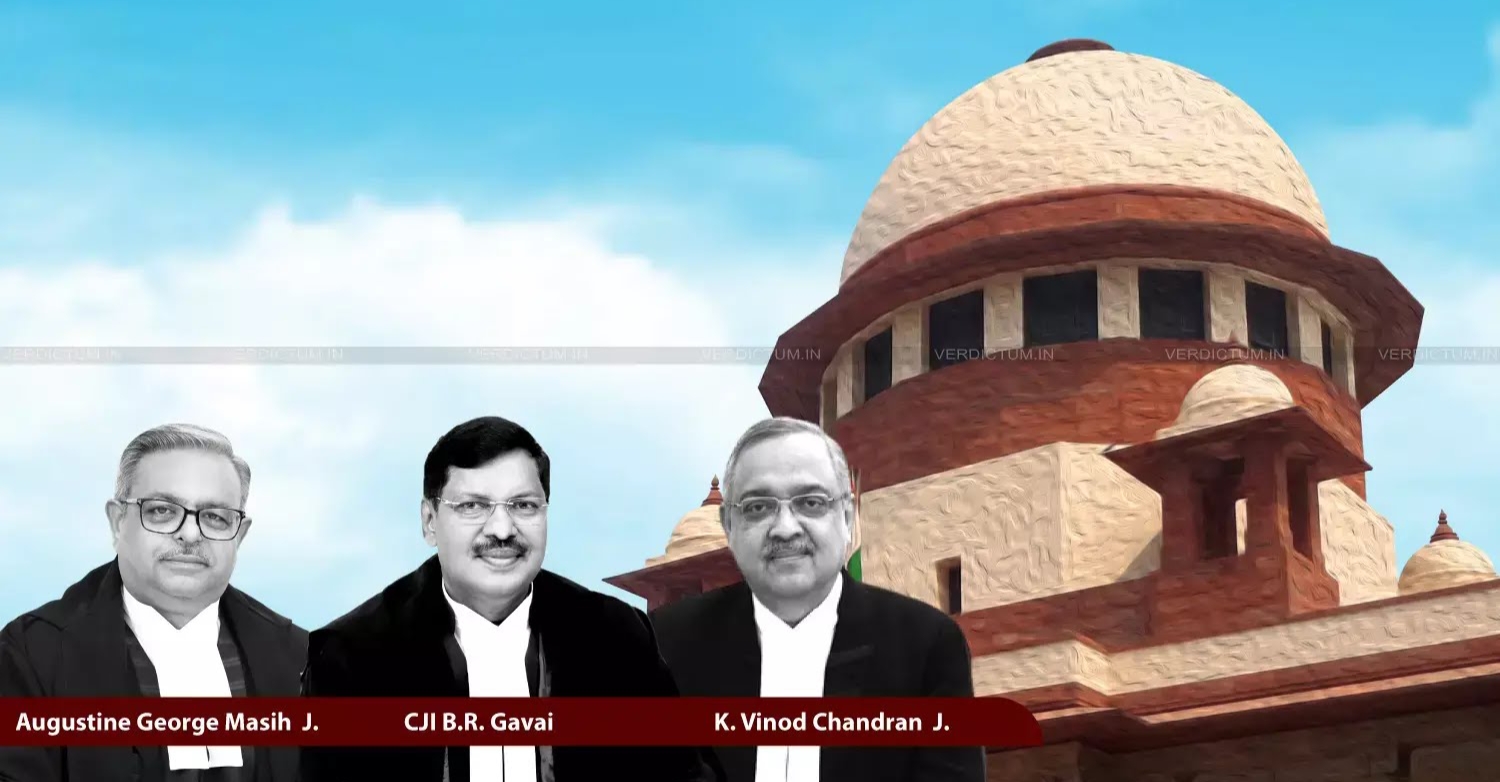
New Delhi: Those applying for recruitment as civil judges will need to have completed a minimum of three years law practice, the Supreme Court held on Tuesday. Through this order, the Court restored a practice that was in place before 2002.
In 2002, the Court ended the three-year condition to attract the best talent.
On Tuesday, the bench of Chief Justice of India (CJI) B R Gavai, Justice A G Masih and Justice K Vinod Chandran held that there is no substitute for first-hand experience of courts and administration of justice.
The bench cited the experience of high courts over the last 20 years since the 2002 order and added that the recruitment of just law graduates has not been successful. “It has led to many problems,” the Court observed.
The order was passed after seeking responses from states and High Courts. The bench analysed the feedback from High Courts, which showed that fresh law graduates recruited as judges did not know the courts and the litigation process.
“If opportunity is given to lawyers acquainted with litigation, it will bring sensitivity to human problems and experience at the Bar,” the bench held.
The All-India Judges Association had moved the court, asking whether the three years of minimum law practice for entering judicial service should be restored.
The bench observed that only a practicing lawyer can understand the intricacies of litigation and the administration of justice. It directed the states and High Courts to amend the recruitment process within three months.
The court had kept in abeyance the recruitment process in some states during the pendency of the matter. It said the recruitment shall be as per the rules applicable on the date of advertisement for the recruitment.
The bench clarified that Tuesday’s judgment will not apply to states where the recruitment of civil judges (junior division) has begun or the notification has been issued. “It will be applicable from the next recruitment process,” the court said.
The court said that a lawyer’s experience will be counted from the date they get provisional registration. The formal registration follows the clearing of the All-India Bar examination. Candidates applying for judicial services would have to submit an experience certificate of a lawyer with at least 10 years standing at the Bar. A principal judicial officer has to endorse the certificate. Those practicing at the High Courts and the Supreme Court will have to produce judge-endorsed certificates from lawyers.
According to Hindustan Times, The Shetty Commission, formed in 1996 to examine service conditions and salary structures of judicial officers, had called for doing away with the three-year law practice rule. The court accepted the recommendation. The Supreme Court formulated the rule in the 1993 All India Judges Association case.
In 2002, the Supreme Court emphasised promoting young talent in judicial service and removed the three-year practice criteria. It noted that the judicial service was not attractive enough for a bright young law graduate after three years of practice.