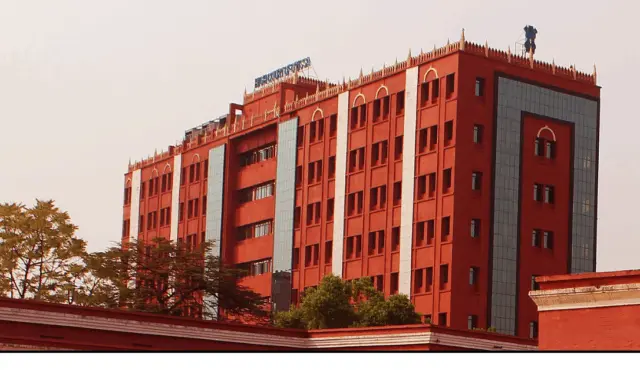
Cuttack: The Orissa High Court has directed the State Bank of India (SBI) to pay a lump sum compensation of Rs 20 lakh each to two daily-wage sweepers, who served the bank for nearly three decades, bringing closure to their prolonged struggle for regularisation of services.
A division bench comprising Justices Krishna S Dixit and Chittaranjan Dash disposed of writ appeals filed by Mayadhar Nayak and Baina Nayak. The two were engaged as daily-wage sub-menial staff (sweepers) at SBI’s Government Treasury Branch in Bhubaneswar since 1995. They challenged a single judge’s order dated June 20, 2025, which had dismissed their plea for regularisation.
The bench observed that the appellants had rendered nearly 30 years of “spotless service”. However, it ruled that they could not claim regularisation at this stage. Earlier petitions filed since 1999 had resulted in favourable orders in 2007 and 2008, directing the bank to pay minimum wages and continue their enga
gement subject to work availability. These orders, the court noted, did not grant regularisation or unconditional appointment, making the fresh claim barred by the principle of res judicata.
During the hearing, the judges explored a negotiated settlement. SBI initially offered Rs 5 lakh each, which the workers rejected. In a personal interaction in Odia, the appellants indicated they would accept Rs 25 lakh each. The bench described the bank’s offer as “too frugal to be mentioned, when bread is costlier than blood,” acknowledging that the workers had “given their sweat & blood” to the institution over three decades.
Taking into account their advancing age—with roughly 10 years left until superannuation—their modest educational qualifications, and challenging social circumstances, the judges remarked that securing alternative employment would be unlikely “in the AI era.” While deeming the workers’ demand of Rs 25 lakh excessive, the court concluded that Rs 20 lakh each would “do complete justice to both sides”.
The bench further noted that regularising their services would impose a greater financial burden on the bank than the lump sum payment. It directed SBI to release the compensation within eight weeks, failing which interest would accrue at 1% per month for the first month and 2% thereafter. Any delay attributable to officials could result in personal recovery of the interest burden.
The court clarified that the order was passed in the “peculiar facts and circumstances” of the case and “shall not be treated as a binding precedent or a Rule of Parity”.