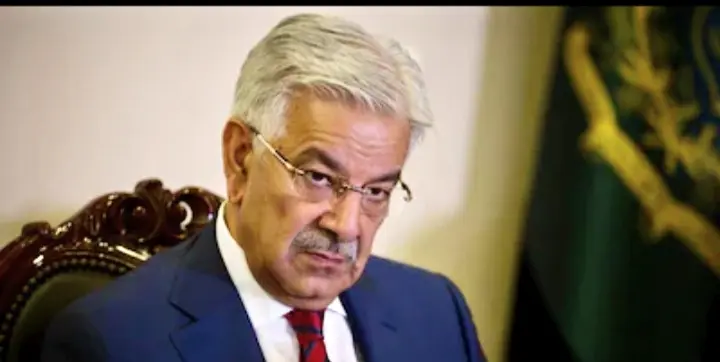
Islamabad/New Delhi: His country is evaluating its options amid continuing tensions over the Indus Waters Treaty and New Delhi’s legal and administrative moves concerning the agreement, Pakistan’s defence minister Khawaja Asif has said, hinting at the possibility of a fresh strategic response against India.
Pakistan may not remain on the sidelines indefinitely and that any decision to escalate its response would be discussed at the highest levels of the government, Asif said in an interview. While he stopped short of explicitly announcing military action, his remarks kept the possibility of a kinetic response in the conversation.
He said that Islamabad was continuously assessing the situation and could consider raising the stakes if required when asked whether Pakistan would continue waiting for a resolution through other means or consider a kinetic solution,
“We are continuously evaluating this situation. Wherever we need to increase our stakes in this entire situation, definitely discussions will take place within the top circles of the government about what alternative can be found or what steps can be taken,” he said.
Pakistan is examining options beyond its ongoing diplomatic and legal campaign against India’s decision to place the Indus Waters Treaty (IWT) in abeyance, his remarks suggested.
Asif, however, did not specify what these alternative measures could entail or indicate whether a military response was being actively considered, as reported by News18.
The comments come against the backdrop of an increasingly bitter dispute over the 1960 water-sharing agreement, which has become one of the biggest flashpoints in bilateral relations.
0n April 23, 2025, India placed the treaty in abeyance. This came a day after the deadly Pahalgam terror attack that killed 26 people. The decision would remain in force until Pakistan credibly and irrevocably abjured its support for cross-border terrorism, New Delhi said.
Pakistan, meanwhile, rejected India’s move, maintaining that the treaty could not be suspended unilaterally.
It has since moved international legal forums. On August 31, 2026, the Permanent Court of Arbitration at The Hague ruled that the treaty remained in force and that India could not unilaterally place it in abeyance. It also issued interim directions concerning construction at the Ratle hydropower project in Jammu and Kashmir.
India, however, does not recognise the jurisdiction of the court and has rejected its proceedings, maintaining that its position on the treaty remains unchanged.
For Pakistan though, the legal proceedings have been a key part of its attempt to challenge India’s decision internationally. Islamabad has also repeatedly warned against what it describes as India’s weaponisation of water.
Taking aim at India’s post-conflict rhetoric, Asif claimed that New Delhi had been particularly aggressive after losing the war.
“These things had so much fervour from India, especially after losing the war, they were red hot newly,” he said, suggesting that India’s statements had frequently changed during the period.