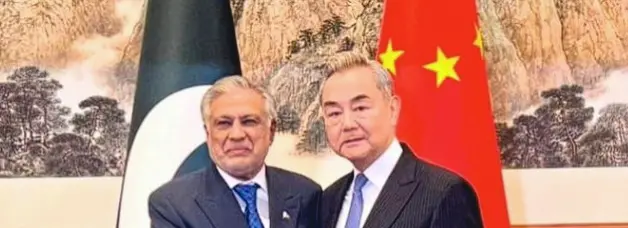
Islamabad: Pakistan’s capital city emerges as a diplomatic hub in the Middle East conflict, with US and Iranian envoys converging for talks to halt the six-week war. US President Donald Trump dispatched Vice President JD Vance, special envoy Steve Witkoff, and Jared Kushner for Saturday’s meeting with Iranian officials, building on a Pakistan-facilitated ceasefire announced earlier this week.
The nuclear-armed Islamic republic leverages its relations with all key parties, thrusting its capital into the global spotlight. Yet beneath the surface, China exerts quiet dominance, collaborating with the Trump administration to cement the shaky agreement, as reported by The Economic Times.
China’s Decisive Intervention:
Post-ceasefire, Iranian officials hailed a “last-minute push by China” for their buy-in, a narrative Trump affirmed. Pakistani Prime Minister Shehbaz Sharif thanked China publicly, while the White House described Beijing’s involvement as occurring at the “top levels” of both governments (New York Times, The Guardian).
A senior Pakistani official, cited by AFP, detailed China’s role: “On ceasefire night, hopes were f
ading, but China stepped in and convinced Iran to agree to a preliminary ceasefire. While our efforts were central, we were falling short of a breakthrough, which was ultimately achieved after Beijing persuaded the Iranians.”
Mediator or Mere Facilitator?
Pakistan’s intermediary position draws skepticism. Arun Singh, India’s former ambassador to the US from April 2015 to August 2016, told Bloomberg: “Pakistan had a utility and so it played a role. We shouldn’t fret too much about it.”
Officials quoted by The Guardian noted China as “guarantor,” promising Iran protection during negotiations. Sharif mirrored Trump’s phrasing on X, stating diplomacy was “progressing steadily, strongly and powerfully” and requesting a two-week deadline extension—tagging US leaders. A White House official denied Trump drafted it, per the New York Times, revealing deeper backchannels amid public warnings over the Strait of Hormuz.
Beijing’s Broader Regional Leverage
China’s influence stems from enduring bonds: Tehran’s top trader despite US sanctions, and Pakistan’s Belt and Road partner in an “ironclad” alliance. Foreign Minister Wang Yi conducted 26 calls with regional counterparts, while envoys crisscrossed the Middle East, a ministry spokesperson said—signaling Beijing’s evolving activism without formal commitments.
However, challenges remain, including Lebanon’s status; Pakistan and Iran push for inclusion, but Israel balks amid Hezbollah strikes. The US eyes separate Washington discussions with Israeli and Lebanese sides.